Showing posts with label Tenancy culture studies. Show all posts

Saturday, June 23, 2018

2018 Renting World Cup - Group Stages

Australia has been performing better than expected at the FIFA World Cup in Russia and we've been watching, cheering and hoping we'll find a path out of the group stages. But how would we perform if countries were being judged on the way renting works in each country? We decided to try and find out!

There is not a lot of information for many countries in the World Cup, so sources are a little sketchy. We apologise in advance for any errors. For a more serious comparison of Australia to other countries, check out this recent AHURI guide. We've based the group stages on the rating given by property investor website Global Property Guide, which judges almost all 32 countries on a scale from "Extremely Pro-Landlord" to "Extremely Pro-Tenant". We have converted that to a number scale of 1 to 5. For tie breakers we've referred to the amount of public housing in the country. The full groups stage list is here. We don't necessarily agree with every referee's decision here, but that's the fun of sport!

Click for full-size!


Here is each group, zoomed in for easier reading.
Group A: Russia and Egypt make it through, leaving Saudi Arabia and Uruguay behind. Russia with a strong public housing presence looks like they may go far in the tournament.

Group B: Spain was the clear winner out of this group, with Iberian rivals Portugal only a point behind. Morocco and Iran both left to consider whether pro-landlord systems was the right playbook.
Group C: Denmark and France dominated this group, with Australia left at the bottom of the group behind Peru. Hopefully in 4 years time we'll have sorted some of the problems that kept us down this time!
Group D: Iceland and Croatia shared top spot in this low-scoring group, Iceland taking the number one spot with a relatively high 12% public housing. The group also saw the first 1 - Extremely Pro-Landlord score for Nigeria. The country actually has some strong protections on paper, but they fail to deliver when it matters.
Group E: 3 teams competed for the top spot in this pro-tenant group, but Serbia and Switzerland's higher public housing meant they edged out Costa Rica. Football powerhouses Brazil were left in last place with very few protections for tenants.
Group F: Sweden dominated this group beating out the more famously pro-tenant Germany for top spot. Mexico equaled Germany's score but Germany scraped through to the round of 16 with a higher public housing. South Korea was left behind perhaps judged unfairly for their unusual jeon-see system which sees tenants pay rent for 10 years up front.
Group G: Belgium easily won this group, with England only just holding off Panama and Tunisia. England managed to scrape through on their significant public housing numbers, but with this stock under threat, will they do the same next time?
Group H: Poland and Colombia were lucky to make it to the next round in another low-scoring group. Senegal managed to beat Japan to avoid bottom of the group status. Japan has fallen a long way since the turn of the century with GPG moving them from pro-tenant to extremely pro-landlord in the last two decades.
See you next week for the finals, tenancy fans!

Flag icons in this post designed by Freepik

Monday, May 22, 2017

Ever the forgotten people

It's been some time since we marked an anniversary on the Brown Couch, and clearly this won't do. We can remedy this today, as it is the seventy-fifth anniversary of Sir Robert Menzies' delivery of the Forgotten People speech. On 22 May 1942 Robert Menzies broadcast his speech over the wireless, as part of a series of "fireside chats".


The speech remains an important touchstone for Australia's political and cultural narrative, because of the role it played in establishing the dominance of the two major parties in our parliamentary system. It preceded the formation of the Liberal Party of Australia that Menzies himself would lead, and it summarised the political philosophy that has more or less captured the centre of Australian politics ever since. At its heart was a forgotten middle class - "those people who are constantly in danger of being ground between the upper and the nether millstones of the false [class] war; the middle class who, properly regarded represent the backbone of this country."

Menzies' and the Liberal Party would go on to win government in 1949. He remained the Prime Minister of Australia until 1966, making him the country's longest serving leader. Those who seek to reach similar heights within the Liberal Party often pay tribute to his rhetoric, as Joe Hockey did when he referenced "lifters and leaners" in the 2014 Federal Budget; or his legacy, as Julie Bishop did when she joined Prime Minister Turnbull in challenging Tony Abbott for the party's leadership in 2015. But perhaps more importantly Menzies' rhetoric of the "forgotten middle class" continues to set the tone for politicians, journalists and commentators who wish to occupy and define the politically fertile middle ground. "John Howard's battlers" and even "Tony's tradies" come straight out of the Forgotten Peoples' playbook, while the Australian Labor Party puts its focus on "values" and the dignity of work, rather than its origins in late nineteenth century class consciousness and historical links to organised labour, as it strives for middle-ground appeal.

The Brown Couch took an in-depth look at the Forgotten People speech back in 2012. We discussed how the text of the speech - particularly as it concerns the notion of "home" - might be interpreted through a housing policy lens. We saw how Menzies' conception of "homes material" was a precursor to the 1956 Commonwealth State Housing Agreement, under which fewer public housing dwellings would be built or retained and more funds were provided to building societies and state banks to aide "the habits of frugality and saving "for a home of our own."" In this way, the post-war experiment of public housing for Australia's returned soldiers and working families began its drawn-out end. Australian homes would no longer be built by governments but by the forgotten middle class.

We explored Menzies' notion of "homes human", in which the home is construed not by its four walls and hollow rooms but by the people and relationships emerging from within. Noting that Menzies seems to have excluded renter households from his ideal here, we examined the history of Australian home-ownership, and the policies and economic conditions that have supported it over a number of generations. In particular we saw how the continuing political interest in supporting home-ownership gradually morphed into support for homeowners. We might now say this has shifted further still to support home values, given so much of the nation's economic wellbeing is tied up in our homes' worth as financial assets. Whether or not they are owned by the people who make them their home should now seem immaterial to this idea.

Finally, we looked in on Menzies' "homes spiritual", where one's sacrifice, frugality and saving to make a home is the very expression of a "fierce independence of spirit". Here we noted that, as far as housing is concerned, saving and frugality had long since given way to borrowing with the expectation of accelerated capital gains. We might now also say that drawing on said gains to fund high levels of consumption not only ensures a home-owner's independence is spiritually rewarding, but financially so as well. And not just for the individual - it could prop up an entire economy if everything else falls apart.

All the more concerning, then, is the exclusion of long-term renters in Menzies' conception of the middle class - those forgotten people he implores us still to forget. The steady decline of first home-buyers and the rise of second, third, fourth and fifth home-buyers must be eroding the very soul of this nation of once fiercely independent folk. More concerning still, from an economic point of view, is the likely concentration of wealth into fewer and fewer sets of hands, and the loss of a key driver of confidence and consumption, if current housing trends continue.

When we looked at the Forgotten People speech five years ago, the Australian property market was going through something of a wobble. It appeared at the time that house prices might have started to peak, and a correction about to begin, so we questioned the very idea that purchasing homes for capital gains amounted to savings. We all know how that turned out. But in our conclusion, we proposed that those with the best claim to live in Menzies' "home spiritual" of responsibility, savings and frugality are tenants. Capital gains in housing may not since have fallen away, but we're inclined to stand by this conclusion. For tenants, that fierce independence of spirit comes from scrimping and saving each week to make the rent, from constructing the best possible home even though it could all come to an end with a simple notice in the mail. From living a full life while making do, staying under the radar to keep that roof over one's head, and moving on with good grace when the time sadly does come.

Whether or not you're in a well paid job - or any job at all - there is deep satisfaction in knowing your home is something you work hard for. Homeowners must feel this, too. No doubt they feel it even as they pass the point where their home's value starts spitting out two or three times more than what goes into it each week, or as prices start to gain more in a year than one can earn doing most ordinary jobs. Sure, there's risk in borrowing against the family home, but as long as you can service the debt and the property's value keeps going up it will more pay for itself in the end. Who wouldn't be satisfied by that?

But taking some of that hard-earned free money and investing it in more housing, where it can work towards the accumulation of more free money? That's not hard work. That's just skimming off someone else's hard work, which is why we don't think Menzies had landlords in mind any more than he did tenants when making his point about "homes spiritual".

Here we might stop to mark some other important anniversaries. It is precisely 219 days since Bernard Salt had a short article published in the Weekend Australian, in which he lamented that young people are eating too much smashed avocado on toast in expensive cafes when they should be putting their money towards home loan deposits instead. And it is now eight days since Tim Gurton said on 60 Minutes that he didn't turn his inheritance into a rich property portfolio by spending $40 a day on smashed avocados and coffee, and not working.

As we have seen, the idea that a home is built on sacrifice is a theme that runs deep throughout Australia, but the reaction to this characterisation of stupid and improvident youngsters not doing enough to get on the housing ladder suggests that, at least in its current form, its time might soon be up. Menzies' forgotten people could put nice things on hold in order to save and acquire a first home; so too their children and many of their grandchildren. Millenials suspect that when it comes to housing they've already missed out. Their future already sacrificed, they're having nice things instead. They needn't give up on "homes spiritual" or "homes human" in the meantime.

Far from spurring the hapless youngsters of Australia on, comments like Salt's and Gurton's may be just what's needed to galvanise another emerging class - that of the long-term renter. This takes us right back to the opening passages of Menzies' speech, and the idea of a forgotten middle class that occupies a space between opponents in a fictional class war. Perhaps its time this middle class was redefined, its challenges reassessed? As we reflect upon this anniversary of the Forgotten People who continue to influence our nation, it's worth asking - who among our political leaders would be brave enough to do that today?


Wednesday, November 16, 2016

Cathy Come Home

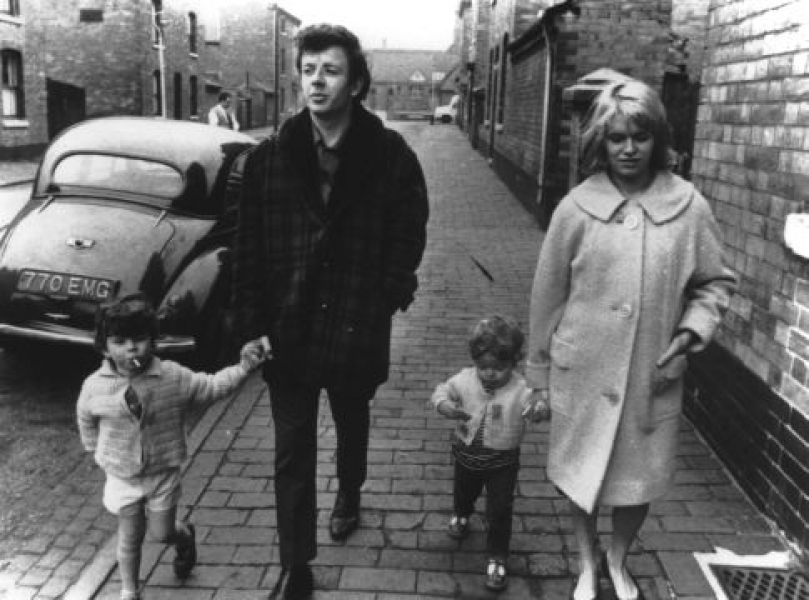
We're all only a few paycheques away from the street, and the Ken Loach directed Cathy Come Home illustrates the point powerfully. Today marks 50 years since it was first broadcast as the BBC's The Wednesday Play on 16th November, 1966 and Cathy Come Home makes a timely addition to the Institute of Tenancy Culture Studies.
Cathy, Reg and the kids
Although it was based in England of the 1960s, the issues resonate strongly here today. Families make up increasing numbers of tenants. Insecure tenancy laws and precarious employment situations mean more families than ever live with the fear and the risk of losing their homes in the private rental market. Housing policies which rely on a poorly regulated private rental sector to house vulnerable people can only exacerbate that vulnerability.

The chief lesson taught by Cathy Come Home appears to remain unlearned 50 years after the film's release. Perhaps it is that we have forgotten it is both unfair and ultimately ineffectual to expect the people surviving the effects of a society's structural failures to simply overcome. This is as true in housing and homelessness as it is in gender issues, employment, or our ongoing relationship with Aboriginal and Torres Strait Islanders. The original owner-occupiers of Australia are now mostly living in rented housing and, recalling the final scenes of Cathy Come Home, children are being removed from Aboriginal families at far higher rates than any others.

The full film is available here, and runs for a little over an hour:


Thursday, October 27, 2016

The Australian Dream

The following is taken from Dr Robert Mowbray's remarks when launching Professor Alan Morris’s book on Tuesday, 25th October 2016. Robert is the Project Officer, Older Tenants with the Tenants’ Union of NSW.
Professor Alan Morris with his new book - The Australian Dream
It’s good social research ...
In Alan Morris’s Preface he quotes Professor George Ritzer (Explorations in the Sociology of Consumption: Fast Foods, Credit Cards and Casinos, 2001) who said (and I paraphrase):
There is a great need for sociologists to do work that can be read by a more general audience. Sociology should be interesting and relevant ... and should inform public dialogues on a wide range of important issues.
This quote reminded me of what two prominent Australian sociologists, Colin Bell and Sol Encel (Inside the Whale, 1978) said nearly forty years ago:
Social research should be linked with the public issues of the wider world. It cannot be value-neutral. Good social research reflects social and political concerns first and techniques later, if at all.
Alan’s book is, firstly, very readable because it lets those struggling in the housing market tell their own stories ... and secondly, it meets Bell and Encel’s criterion of ‘good social research’ because it reflects social and political concerns foremost.

Recent publicity about older renters ...
Over the last month the plight of older renters has been highlighted in both newspaper and magazines. Some examples:
27 October 2016: Peter Martin writes 'We are condemning more and more Australians to retirements burdened by rent'. He continues: ‘One of the barely stated reasons why house prices have been climbing out of reach of new buyers is many of us have been becoming richer. Would-be investors poured into the market. One in every six taxpayers became a landlord. To get there and stay there they've had to outbid would-be residents.'
10,11 October 2016: Kirsten Robb writes 'Life-long renters face financial stress in retirement'... according to a paper released on Monday by Swinburne University, which found more Australians are renting in retirement and facing financial stress. The authors of this report, Dr Andrea Sharam and others, found: 'The proportion of aged persons in Australia is set to increase significantly, posing many challenges. Amongst these is the growing number of households who lack housing security in retirement. ... A very marked outcome is that to be a private renter at 45 years of age is likely to mean being a renter and highly impoverished, in retirement.’ 
4 October 2016: A great essay by Anwen Crawford who writes about 'Nowhere to go – older women and housing vulnerability': 'The number of older women who are rental tenants in Australia is growing, and these women ... are increasingly vulnerable to poverty and homelessness ... Housing affordability and security for rental tenants will only become a more pressing issue as Australia’s population continues to age.'
4 October 2016: An excellent article by Kim Arlington, entitled 'Over-55s are the forgotten homeless': In this article Ms Yeoman, Chief Executive of Mission Australia said: 'older women can face a housing crisis for the first time in later life ... previously they may have had a stable housing history but even small changes in their financial circumstances – a rise in rent or utility bills or unexpected health costs – could propel them into homelessness.'
So Alan Morris’s book is well timed ...
Quote from Elsie, private market tenant:
‘... I think when people get to 65 and they’re on a Centrelink pension and in private rental, they should be entitled to take their life if they wish ...’
Quote from Rhonda, private market tenant:
‘I hate it because you’re more or less at someone else’s mercy all the time.’
Quote from Dan, public housing tenant:
‘When you know your accommodation is right, this is especially when you’re older, you can pursue other interests. You’re more relaxed ... you’re in for a longer life.’
Quote from Marlene, home owner:
‘It [home ownership] just gives you security ... It gives you freedom of expression ... Your home is an extension of your personality.'
Alan documents how, over the last two decades, the private rental sector across Australia has once more become substantial. It presently accommodates about one in four households. A major shift is that, for many households, renting in this sector is no longer a transitional stage. And the proportion of the population aged 65 years and older, like all developed economies, has increased significantly and is continuing to do so. Many will be become trapped in the private rental sector. Indeed, for a number of reasons, many will ‘fall out’ of home-ownership. Alan’s premise is that the capacities of Australians who are dependent primarily or solely on the Age Pension for their income are shaped fundamentally by their housing tenure. He places the 'meat on the bones', with real people telling their stories.

Alan conducted 125 interviews and highlights that many of the older private renters in his study were battling to purchase everyday necessities. They fare very poorly and, indeed, they are the new face of poverty in this country.

Alan’s book is divided into chapters that, by tenure, examine the cost and standard of accommodation, consumption and living a decent life, social ties, leisure, health including dental care and pharmacist costs ... and so on.

Alan found that, for older private market renters, the cost of their accommodation and negligible security of occupancy were primary concerns ... and this fundamentally shaped their everyday lives and dispositions. For most of the private renters, the cost of their housing was a considerable burden and provoked a great deal of stress. Indeed, this contrasts to almost all of the social housing tenants who felt that their rent was reasonable and manageable and that it left them enough disposable income to live a decent, albeit frugal life. But many of the older private market renters were in a dire situation due to the high cost of their accommodation. Many were having to use more than half of their income to pay for their accommodation. The high cost of their accommodation restricted their consumption and made it difficult for them to lead a decent life. Alan concludes that extreme frugality and self-deprivation were central features of many older private market renters’ lives.

He found that many private market renters were not able to buy fruit, fish and meat regularly and were dependent on unhealthy processed food. Also, any unexpected expense was a major blow and precipitator of anxiety. And, so medical expenses were seen as a serious burden by a substantial proportion of older private market renters and it was evident that there was a tendency to avoid health services.

Alan found that mental health was a major issue, with most of the private market renters reporting that they lived in fear of being asked to vacate or being subject to an untenable rent increase. There is a constant fear and much trepidation. As a consequence, everyday life is often enormously stressful. He says minimal security of occupancy, financial stress, inadequate accommodation and inappropriate neighbourhoods contributed to many of the older private renters being plagued by these high levels of stress. This contrast to homeowners and social housing tenants.
It’s the same story on all accounts. Home owners and public housing tenants on the Age Pension fair well, but private rental market tenants on the Age Pension struggle. (The noticeable exception here is public housing tenants in Millers Point, Sydney, who are being forced to relocate.) Except for those who receive support from family members, older private renters are very much an abandoned lot!
A digression ...
Here I would like to reflect on one of the three key pillars of the NSW Government’s ‘Future Directions in Social Housing in NSW’ strategy. It talks of ‘providing more opportunities, support and incentives to household to avoid and/or leave social housing.’ It talks of a system where, in the future, 'housing assistance is seen as a pathway to independence' and, to do this, placing increased reliance on private rental assistance.

This is placing an enormous degree of faith in the private rental market. But hold on!

Firstly, from The Sun-Herald (23 October 2016) comes the story of Ankita who is forced to show savings of a year's rent in advance before her application for a tenancy is even considered. Those interviewed by Alan provide graphic accounts of the type of accommodation they have been forced to rely upon in the private rental sector … and this is the private rental market on which Future Directions relies as an alternative to expanding social housing.

Secondly, Family and Community Services’ website states that Future Directions is backed by the whole of Government – including Health, Education, Justice, Planning and Environment, Industry ... but there is no mention Fair Trading! Indeed, Fair Trading has been reviewing the very legislation that can provide all tenants with greater security of tenure, for example, by repealing ’no-grounds’ eviction provisions. The omission of a reference to Fair Trading on this website page suggests that one arm of government was not speaking to another arm of government when Future Directions was being formulated!

Further, the Federal government is a key player here. Private renting will only be a reasonable long term option when our taxation regime discourages speculation in housing by ‘mum-and-dad’ investors and encourages institutional investors. Such a change is loudly rejected by the Federal Government. Discouraging speculation is picked up in a recent editorial in The Sydney Morning Herald (25 October 2016) which reads:
Mr Morrison says the objective of his approach "is to have policies that mitigate the artificial inflation of asset prices". That artificial inflation derives from negative gearing and the CGT discount.
And again, in recent days, Lucy Turnbull, Chief Commissioner of the Greater Sydney Commission, said greater institutional investment in housing, alongside stronger legal protections for tenants, could help to make renting a more attractive option.

Alan Morris’s book is an indictment of our political masters’ failure to acknowledge the changes necessary to make private renting a more attractive option ... along with years of neglect of public housing.

Alan Morris’ skills assist public housing tenants ...

And, of course, after Alan forwarded his manuscript to the publisher, he used the same skills in pulling together Shelter NSW’s Brief entitled ‘A contemporary forced urban removal: The displacement of public housing residents from Millers Point, Dawes Point and the Sirius Building by the New South Wales Government’. The power of this document is that, again, the residents tell the story.


Let’s launch Alan Morris’s book ...
Firstly, let me acquaint you with two little known facts about Alan. He is a serial letter writer to The Sydney Morning Herald, with another letter on 25 October 2016, the day of his book launch, where he writes: ‘Social housing as a viable option for low-income households needs to be revived’.

Also, he is a veteran of forced urban removal, having worked alongside of the victims of such in Apartheid South Africa. Back in 1986 The New York Times described Alan as ‘a white activist from the Transvaal Rural Action Committee, a group that monitors forced removals.’

Alan Morris’s book is more than a contribution to the current housing debate:
  • It is an affirmation that past government housing policies regarding home ownership and public housing have led to satisfied outcomes for older persons on low incomes. 
  • It is a warning ... indeed a dire warning ... to present and future governments that a weakening of security of tenure in social housing (including any re-run of what has occurred in Millers Point over the last two and a half years) and a reliance on the private rental sector as it is currently constituted will led to immense hardship for older persons on low incomes in future years.
Congratulations to Alan Morris for such an easy to read and compelling publication and a big thank-you to the 125 people who shared their experiences with all of us.

You may read a review of Alan Morris’s book in the Huffington Post on 5 October 2016 and some media around the book launch here.

Wednesday, October 19, 2016

Tell us what you really think, Belle

Thanks, Belle Property. This charming little reminder of how some real estate agents really view us tenants was dropped in our inbox this morning.

Clearly it’s supposed to be funny. Can you imagine your landlord finding it in their letter box and having a little chortle? How hilarious that it is so easy to remove someone from their home, like changing clothes. Perhaps they even hoped for some controversy! There’s no such thing as bad publicity, right?

Hey landlords, don’t like your tenants anymore? Did they ask for repairs, or question a rent increase? Maybe you just don’t like they way they look. No worries, just get your agent to give ‘em the flick. As non-property owners they’re vermin, barely human, certainly not worthy of a home. Its rare that such a dismissive attitude is so clearly drawn out.

What’s most frustrating about these kinds of attitudes prevailing in real estate agencies is that avoiding them is easier said than done. When you’re looking down another 30 applications, eviction day is coming up fast and at least this place doesn’t have obvious mould problems, knowing your property manager thinks your vermin doesn’t rate as highly.

The thing is though property managers need tenants. Sales agents don’t, except to use our furniture to make a place look homely. But a property manager without tenants is like a mouse without cheese, scrounging around looking for some other way to make a living. We might be vermin to you, but we pay your wages.

UPDATE 20/11/2016. Belle Property has responded to this post with the following message.
"We apologise if any offense was taken as a result of these Property Management flyers, it was never the intention. We in no way believe tenants are comparable to vermin and we apologise that it has been interpreted in this way. It was intended as a fun light-hearted message, which evidently wasn’t achieved. We are happy to discuss this further offline if there are any further queries. We will cease to use this marketing material effective immediately."

Also posted as a Facebook note here on our Facebook page. Like us for all the latest from the TU!

Thursday, August 25, 2016

The Housing Department with no housing?

Robert Mowbray, the Older Tenants Project Officer at the Tenants Union, remembers a community work text from his social work studies in the early 1970s. It had the quirky title The Householder's Guide to Community Defence Against Bureaucratic Aggression. The author was Antony Jay, who went on to fame with his Yes, Minister series. With great sadness, the Institute of Tenancy Culture Studies notes his passing - his obituary in the SMH is worth a read.

Remember the episode called 'The Compassionate Society'? It was about a most efficient hospital. It was the one with no patients! Well, Antony Jay would not be surprised that in New South Wales we will soon have the most efficient Housing Department ... the one with no housing stock, as Housing NSW proceeds to divest itself of its stock. Stranger, indeed, than fiction.
This is one of the objectives of the Communities Plus initiative. A third of NSW public housing will be transferred to non-government organisations over four years, in tranches of about 1000 homes. This was reported here.
Antony Jay was responsible for such gems as 'A basic rule of government, minister, is never set up an inquiry unless you know in advance what its findings will be ...'.
He also developed an interest in public choice theory: 'In economics public choice theory assumes that all economic actors – businessmen, consumers, politicians and bureaucrats – are motivated primarily by individual gain. Thus, politicians pursue re-election and bureaucrats pursue budget-maximisation, while voters and interest groups chase free lunches. The trick is to know your enemy and exploit his self-interest to your own advantage'. Read more here.

Wednesday, August 17, 2016

Happy anniversary, Tenants' Union of NSW

The very first meeting of the Tenants' Union of NSW was held 40 years ago today, on August 17th 1976. We are now 40 years strong.

Past and present staff and board members of the Tenants' Union,
celebrating 40 years of advocacy
We've been building up to this milestone all year. We launched our celebrations with a BBQ at Northcott Towers, sharing food and cake with good friends and colleagues. We've shared 40 moments from our organisation and our network's history, reflecting on the great work of tenants' advocates past and present. And we've compiled a 40th anniversary bumper edition of the Tenants' News.

On Monday we threw a bit of a birthday bash, including a half-day forum on the future of tenants' rights. We've already shared some of the best bits on Facebook, and we'll be adding a few more over the next couple of days.

Oh, and we've produced a half-hour movie that tells our story. We're really quite proud of it - we'd love for you to check it out.


Happy anniversary, Tenants Union of NSW!


Wednesday, May 25, 2016

Lessons from America - Evicted

"Three generations of Hinkstons, eight people all up, lived in a two bedroom, one bathroom apartment in Milwaukee. It was cramped and mouldy, there were roaches everywhere and no repairs got done. They were there because they had been evicted from their five bedroom house, home for 7 years, and had nowhere else to go. Now sharing couches and the floor, the children couldn't get a proper night's sleep and fell asleep during the day, even through classes. The adults had to find a way to scrape together enough money to find somewhere better."

But the rent has to be paid in the meantime - so will they get to move in their own time, or will they be evicted first?


Evicted should be required reading for all. The holistic nature of the issues raised mean there is no one with a passing effect on our housing system who should not feel some responsibility for that effect.
Evicted is written by Harvard sociologist Matthew Desmond, who lived in the communities he writes about and has previously experienced homelessness first hand. His work excoriates any lingering doubt that society does have an ongoing responsibility to make sure its people not only have a roof above their head at any one time, but a home in which they can plant roots.

Desmond followed the eviction experiences of 8 families in Milwaukee, Wisconsin. These stories demonstrate some part of the range of issues preventing poorer people in the United States from housing themselves and their families. There are single mothers, recovering addicts, crowded multi-generation families. Evicted also pulls back the curtain on the thinking of landlords by following both sides of an eviction. Empathy, understanding and flexibility are all demonstrated - but so is the ultimate divergence of interests. If the rent isn't paid, or the repairs aren't worth the hassle, there is only one response: eviction.

Milwaukee is not Sydney or Dubbo or Albury. Australia is not the United States. What lessons can we take from Evicted? There is a temptation to take the US as a warning, a guide of how not to house people. It can be comforting to feel that things are not as bad here, but that is dangerous thinking which allows things to get exactly as bad here as they are shown to be there.

For instance, Desmond cites the American Housing Survey 2013 that between 50-70% of low-income renters in America are paying 50% of their income on housing (including rent, utilities, and other charges required to house yourself). Our figures look better at first blush - somewhere between 20-40% of low income renters are paying more than 50% income on rent. However, our measures are generally limited to rent. Housing costs properly includes all the things needed to make a dwelling habitable - no one should live in a home without running water or electricity. When utilities are thrown back into the mix, we start to look very similar to the US. An examination of the 2011 Census suggests that at least 50% of low income renting households report paying more than 50% of their household income on housing costs under the same definition as the US.

In part our better position is because of the Commonwealth Rent Assistance. Of Australian renters receiving CRA, which includes renters who are in moderate, or even high, ranges of incomes, more than 25% of CRA recipients would pay more than 50% of their income just on their rent. Include the CRA payment and the number is halved to just 13%.

Evicted also brings to light the structural nature of continuing impoverishment. In the United States structural housing insecurity comes down most strongly on people of colour, and especially black men and women:

There are no figures on similar rates of eviction for Aboriginal people in NSW. In fact, there are no figures on rates of eviction for anyone in NSW, or Australia. We simply do not know how many people are booted every year, nor the cost of those forced moves both to the families being evicted, and to the economy in lost wages, increased support services, and motivated workers. Desmond knows these figures because he previously designed and carried out the Milwaukee Area Renters Survey, a truly impressive piece of work that Sydney and Australia sorely needs to replicate.

The final element of interest to us here in Australia is the impact of tenancy legislation. In Milwaukee, no grounds notices are permitted - and are explicitly used to cover the same multitude of sins we see here in New South Wales. Repairs do have strict codes but enforcing the standards often means becoming vulnerable to eviction in response.

Tenant representation in eviction proceedings in Milwaukee is rare and expensive - only generally available to well-off tenants. In New South Wales we are better off - though our Tenant Advocacy services are severely underfunded and unable to offer assistance to all who need it. The bread and butter work of the Civil and Administrative Tribunal (and its predecessor the CTTT) is tenancy evictions, making up approximately 60% of its entire workload.

If we want renters to have stable, affordable and liveable homes, we need to make a conscious effort to create that environment. It will require significant changes to the way renting is viewed by lawmakers and landlords. Separating the interests of those two groups may be the biggest change of all.

An excerpt from Evicted was published in the New Yorker and is available here: http://www.newyorker.com/magazine/2016/02/08/forced-out

Tuesday, March 8, 2016

Happy International Women's Day!

In celebration of International Women's Day, the women of the TU have enthusiastically produced a special edition of Tenant News – our printed publication for tenants.


At the 2011 Census there were more than 950,000 women living in rented homes across New South Wales. Today there will be many thousands more. This issue of Tenant News tells some of their stories – stories of struggle and hope in finding home.

You’ll find women writing about the legal insecurity that impacts on their ability to make a home when renting, and about how LGBTIQ, refugee and older women face discrimination in the rental market. We also explore public housing redevelopment policies and more.

The common thread in all these stories is the search for stability, liveability and affordability when making a home. Renting laws can be changed to facilitate these basic needs. In our submission to the Residential Tenancies Act Review, we've asked Minister Dominello to do this by including changes to the law on evictions, rent increases and repairs. Read our full recommendations for change in our submission.

We've printed 4,000 copies of Tenant News – you should already have yours if you're on our postal list. If you'd like a copy (or many), please email us. Copies are free for tenants and community workers!

Please help us by giving Tenant News to other tenants, community workers and clients.

Stories in this issue include:

Women finding home
Women from a refugee background face a multitude of challenges and barriers when trying to find a place to call home in Australia. Read more

More than bricks and mortar
Robyn lives in south western Sydney and has experience as a tenant who has been through a redevelopment process in public housing. Read more

Women working for change
We talked to six women who live in residential parks who are all creating meaningful change within their communities. Read more

Transgender women & homelessness
Although only 7-11% of the population are same-sex attracted and/or transgender they constitute 25% of the young people who are homeless. Read more

A champion for housing rights
Ruth Simon has dedicated herself to ensuring justice for Aboriginal people through her work, both paid and unpaid. Read more

The Tenants' Union turns 40!
On Thursday 11 February the TU launched our 40th anniversary celebrations with a BBQ at Northcott Community Centre. Read more

When home isn't safe
Indigo is a 20 year old queer person who has felt unsafe at times, due to the behaviour of housemates in share housing. Read more

Is my residence my home?
One of the themes for the TU's 40th anniversary celebrations is My House, My Home. But is that true if you rent? Read more

Women tell their tenancy stories
Six women give different perspectives on the life of a tenant and what 'home' means to them. Read more

Tenancy Q&A: Domestic violence
Cass Wong, TU Litigation Solicitor, explains the steps required for a survivor of domestic violence to terminate their tenancy. Read more

Friday, January 15, 2016

Which Optus-approved renter are you?

Of all the contributions to The Institute of Tenancy Culture Studies, a report on renting from a Telco giant was one we’d have pegged as most unlikely. And yet, somehow, here we are. On Wednesday Optus released excerpts from 'The Renter of the Future' – a survey that purports to uncover the “attitudes, behaviour and technology trends” of Australia's tenants. Its commissioning and publication are openly driven by a product launch targeting rental households, and there's certainly no shortage of cringeworthy marketing speak throughout. So it’s tempting to dismiss it as a work of highbrow advertorial. But it does make some claims relevant to more than whether you say ‘Yes’ to a new modem, and has been attracting attention, so is worth some unpacking.

'Yes' man Josh Thomas: is this the future of renting?

A central finding of the report relates to how and why tenants are in the rental market. It claims that 27% of tenants are “flexibility renters”, whose status as tenants is attributable to [liking] the flexibility of moving when they want to”. This is in contrast to the other 73% - “stability renters” who “prefer to stay in one place for a while”.

It also contrasts markedly with our 2014 survey of the NSW rental market. When we asked “Why do you rent?” only 9% of respondents nominated ‘flexibility and mobility’. We gave respondents six options in response to this question - accounting for those priced out of the buyers’ market for now or for good, those who prefer to invest elsewhere, and those who are renting where they can’t buy. Whilst the Optus report contains no information as to the methodologies employed, it would appear that its use of a simplistic dichotomy between ‘renting for flexibility’ and ‘renting for choice’ has created a distorted picture of tenants’ motives.

The Optus study also includes a separate division of the renting population into four ‘personalities’. Only one personality, the “pragmatic homeseeker” comprising 44% of all tenants, rents due to an inability to enter the homeowners’ market. The other groupings are “pragmatic lifestylers”, “tech lifestyers”, and “tech homeseekers” - the latter categories relating to tenants' technological and digital engagement.

But accounting for tenants that cannot afford to buy, those looking to buy or build, and those saving to buy, our study found that 69% of tenants could be termed ‘pragmatic homeseekers’. We’d also note the obvious artificiality in the Optus report's division between tenants shut out of the owners’ market and those interested in the tech industry. Clearly, one can ardently desire home ownership and remain passionately interested in their smartphone. The four ‘rental personalities’ suggest mutual exclusivity where none exists. Perhaps this component of the report is merely a product of its commercial imperatives.

Finally, the Optus report does note that renters move much more frequently than owners – every 1.8 years compared to every 8 years for mortgagors and 18 years for those who own outright. But it fails to consider the disconnect between such frequent moves and the relatively low number of ‘flexibility renters’ (whether you put that figure at our 9% or Optus’ 27%). Could it have something to do with the instability forced upon tenants by our rental laws? We say it certainly could. Our study found that, of respondents who had moved in the last three years, 14% said their landlord telling them to leave was the main reason, 12% nominated a rent increase, and 4% pointed to a disagreement with their landlord. Moreover, a full 92% were worried about having to move in the future. On a national scale, a recent study from the Australian Housing and Urban Research Institute found that 27% of tenants who move house have their hand forced by eviction or unaffordability. 

So proceed with caution - it’s fair to label the key claims of the Optus report as dubious to say the least. We won't pore over its supplementary claims, though in most cases such an exercise would be better suited to an advertising blog. 

But at the very least, the mere existence of this report points to a burgeoning realisation that tenants represent an ever-growing slice of whatever market you're trying to sell into - and that perhaps we should be taking better care of them.

And yes, we also value a high-speed Internet connection as much as everybody else.

Wednesday, October 21, 2015

Back to the Future for Renters

Today, the 21st of October, 2015 is Back to the Future Day. Movie-goers are celebrating the day that Marty McFly arrived in the future in the second film of the series. Marty came originally from 1985, and it made us wonder what had changed.
So what did renting look like in 1985? See below- the short story, there are many more renters than there used to be, and we're paying a lot more rent! Wages haven't gone up as much as rents have, and groceries have barely gone up at all (in fact in real terms, the kinds of items we've included here have come down in price).


Also in 1985 then NSW Housing Minister Frank Walker announced the first tenants advice services to be funded by the interest earned on tenants bonds. This was a big step up in capacity from the previous network of entirely voluntary services. At the time, we were the first state to utilise bond interest money in such a truly innovative, sensible way.
Now in 2015 we're asking for those services to continue to be funded at fair and sustainable levels in the More Bang for Your Bond campaign- in just a few weeks time we'll be presenting our petition and postcards at parliament house. Details to come, but there's still plenty of time to show your support!

Great Scott!

Tuesday, September 15, 2015

The Philosopher, the Economist, and the Prime Minister's Dogbox

While catching up on your weekend reading you might have come across this curious little article from the New Philosopher magazine - The Philosopher's Dogbox - offering a thoughtful discourse on the virtues of renting a home.


Its author, Damon Young, observes the nature of tenant-hood:
A child of the depression, one of my grandmother's favourite slurs is "bludger": a shirker, and idler. It echoes the property equivalent: renter. To lease a home, in this universe, is to be capricious, lazy, and vulnerable. And the last is like a cosmic punishment, to be pushed around by landlords is the penalty for sloth. Those who lose the housing game often end up in flats or apartments, what my grandmother calls a 'dogbox'.
... amid the changing shape of the private rental market:
Many cannot afford mortgages at all - including, to my grandmother's alarm, my wife and myself. Part of a generational trend of falling home ownership, we will never be that couple on the bank advertisements, beaming after bidding. We rent, and we keep shifting as high turnover and prices force us from house to unit, suburb to suburb. And we are now competing with wealthier renters, whose accounts are fat enough for leasing but not for buying. Even with discipline and austerity, virtues my grandmother rightly lauds, we will not be rewarded with her three bedrooms, red bricks, and hydrangea borders. We live well, but our two bedrooms and tiny courtyard are that bestial symbol of failure: the dogbox. (A kennel that costs almost half our household earnings, after tax.) My grandmother's mantra - work hard, save cannily and own early - is sadly anachronistic.
Young then takes us on a tangential journey: through Martha Nussbaum's, Fragility of Goodness, where "no amount of data or prudence can guarantee freedom from suffering - in fact, sometimes this very susceptibility gives existence its preciousness"; to a contemplation of Karl Marx's musings on private property, that "has made us so stupid and one-sided that an object is only ours when we have it..." - allowing us to wonder if perhaps "we no longer identify as owners - successful or failed, canny or imprudent - we are one step away from this emphasis on having."

For the Philosopher, consignment to the dogbox is not without solace, but there is a palpable discomfort in his story. Enter the Economist, who is only too happy to explain. A second article might also have caught your attention over the weekend - Bloomberg's The Threat Coming By Land. It begins with a proposition:
... One of the most pressing economic dangers of the future is getting short shrift: Landlords are eating the world.
Because of course, it is our landlords who are winning the housing game. It is landlords - indeed our mums and dads, and not our Philosopher's grandmother - who have consigned us to the dogbox.

The article continues:
There is a growing concern that wealth inequality has skyrocketed, and that capital income accounts for a growing share of the economic pie. This was the theme of Thomas Picketty's "Capital in the Twenty-First Century." But although we usually think of "capitalists" as they were defined by Karl Marx ... we forget that land also is a form of capital, which means landlords (and homeowners) are capitalists, too. ... It is land, not corporate capital, that has been responsible for the the lion's share of the increase in capital's share of income.
The article goes on to argue that land taxes make good economic sense because they promote productive use of land, and stabilise its value so that its cost does not draw money away from its productivity. (If this sounds familiar - it should: the Brown Couch has long said that land tax is the fairest tax on earth). But its reference to landlords as capitalists is what interests us today.

Quite aside from his casual reference to Marx that draws us promptly back to the Philosopher's critique, in acknowledging property as capital the Economist reminds us of a key foundation on which modern housing policy is built: the idea that ownership is akin to permanence, and permanence means stability. In the face of the raging battles between capital and labour that marked the opening decades of the 20th century, "every spadeful of manure dug in, every fruit tree planted, converted a potential revolutionary into a citizen" (Neville Chamberlain, 1920).

Patrick Troy explores the implications of this for Australia in his 2012 book Accommodating Australians, where he discusses the development of the first Commonwealth State Housing Agreement (at pages 90-92). It's worth extracting here at length as, aside from the substantive point it serves to highlight, it provides some useful background for the state of housing policy today:
The initial reaction of the Opposition to the Commonwealth State Housing Agreement was almost apathetic. Little was said in criticism of the agreement, the Opposition aiming its fire at the issue of industrial unrest in the building industry. The Leader of the Opposition, Robert Menzies, was at his most perfunctory in his comments on the Bill. Certainly, there was little political point in assailing a national housing project at a time of demonstrable need, but strangely the Opposition did not try to exploit the controversial aspects of the Commonwealth Housing Commission report, particularly nationalisation of land. The Commonwealth State Housing Agreement would have cleared the Parliament with largely bipartisan agreement but for one extraordinary political misjudgement. 
The notion that by some mystical process home ownership transformed a working man into a 'little capitalist' was not new. A real estate agent, Richard Stanton, had expressed the rudiments of the concept to a housing inquiry as early as 1913: "A working man can come to us (to buy a house) and be treated just as if he were a capitalist".
The notion of 'little capitalist' had been often used by conservative politicians to deride the housing priorities of Labor governments, as in this description by a Conservative MP of the establishment of a State Housing Commission in New South Wales by a Labor government: "The Government now brings in a measure that will improve the housing system and sooner or later create a number of small capitalists". (Cater 1941)
Neither side of politics had established a monopoly on unequivocal support for home ownership. Some non-Labor politicians had supported the interests of landlord investment in rental housing and had shown a tendency to sneer at the home-owning pretentions of lower income earners. Others strongly favoured home ownership as a source of social stability. A number of Labor politicians had asserted the interests of tenants exploited by the private rental market, and advocated greater home ownership as a remedy. Others were strong supporters of low rental public housing. These were not clearly drawn ideological positions but the Commonwealth State Housing Agreement debate was to produce a marked hardening of partisan battlelines on the issue of home ownership. 
During an otherwise unexceptional speech in the Committee stages a government supporter, Dr Gaha, proposed a scheme to use child endowment payments as a means of amortising the costs of home ownership, basing his argument on well-worn themes of home ownership increasing satisfaction and stability. He went on: 
"In this way we would make the average worker a capitalist and that is our only solution to Communism in this country. If this scheme now before us has any weakness at all, it is its failure to enable the occupant to become the owner of his own home."
Replying to points made during the debate, [Minster for Postwar Reconstruction] John Dedman tried to refute Gaha's argument but his frank expression was pounced on by Mr Larry Anthony, a senior member of the Country Party and an accomplished parliamentary tactician. The critical exchange is as follows: 
DEDMAN: The Commonwealth Government is concerned to provide adequate and good housing for the workers; it is not concerned with making workers into little capitalists. 
ANTHONY: In other words, it is not concerned with making them homeowners. 
DEDMAN: If there is any criticism which may be directed against the policies of past governments supported by the present opposition; it is this: too much of their legislative program was deliberately designed to place the workers in a position in which they would have a vested interest in the continuance of capitalism. This is a policy which will not have my support at any rate."
What followed is a superb case study of the use of parliamentary forms for maximum political exploitation. Anthony moved quickly to amend the schedule of the Bill to insert a provision that would have allowed a tenant to buy a dwelling on rental purchase terms after three years of occupancy. In a series of highly effective political speeches, Anthony ... excoriated the government for discouraging home ownership. Anthony expressed the nub of the Opposition attack: 
"The minister for Postwar Reconstruction said the legislation to enable workers to own their own homes would create a lot of little capitalists and that would retard the onward march of socialism. That was a most extraordinary statement. Does it mean that the policy of the present government is to discourage home ownership?" 
This approach was in harmony with the evolving Liberal-Country Party philosophy of dismantling wartime controls and encouraging individualism and private enterprise. Opposition speakers were able to contrast socialism, controls and denial of home ownership with individualism, free enterprise and home ownership, expressed in a ringing credo by Archie Cameron: 
"I believe in private ownership of property. I believe in the freehold principle. I believe that a man is entitled to make certain things his own. I believe that persons who acquire property will take greater care of it than tenants will take care of property which they rent." 
Although the government was able to use its parliamentary majority to defeat the writing of home ownership into the legislation, and although the Opposition accepted the main thrust of the Commonwealth State Housing Agreement, the dimensions of the housing debate were changed utterly by Dedman's statement. The Opposition parties were able to paint Labor as resolute opponents of home ownership and to pledge themselves to optimum home ownership. Dedman protested feebly that he would welcome the day when every head of a family throughout Australia owned his own home, but the damage had been done.
By the time the next government - lead by Robert Menzies - came to renew the Commonwealth State Housing Agreement, Dedman and Anthony's 'little capitalists' had been usurped by a forgotten middle class. But the theme of property ownership remained, and the sale of state owned rental housing became a feature of housing policy for many years to come.

But as the Philosopher reminds us, the rate of Australian home ownership is in decline. And as the Economist would have us say, it is the landlords who make it so. To understand this, we need look no further than the path on which Menzies has taken us: the forgotten people - aka the Philosopher's grandmother - bought their homes, then grew old and comfortable within them on a modest pension. Their children bought homes for themselves, too, but they didn't want to just be comfortable as they got old... They wanted to maintain the higher standards to which they were accustomed. The pension was not enough, and to rely on such welfare was contrary to the individualism and freedom that had become our national mantra.

So they bought extra homes. Homes they didn't need; homes that would increase in value over time - allowing them to generate income through rental revenue and price appreciation. And because public housing was being sold off, and more of it was not being built, governments developed tax incentives to encourage more and more of these children of the forgotten people - our mums and dads - to invest in housing. Or, more specifically, to invest in second-home ownership, so that their children and their neighbours' children could move into cheap rentals while toiling and saving for a home of our own.

In the end, they became little capitalists. And for them, as the Economist alludes, this path was a good one. For their children, it was not so much.

Today Australia has a new Prime Minister. We congratulate the Member for Wentworth on his not-so-sudden ascension to high office - this man who once famously claimed to know what it was like to live in a rented flat. To have as our Prime Minister a person who understands the dubious self-loathing that comes with consignment to the dogbox is no small thing. But it remains to be seen what this will mean for anyone who remains so consigned.

In his victory speech Turnbull claimed his would be a "thoroughly liberal government, committed to freedom, the individual and the market". His Deputy, Julie Bishop, gave an express tip of the hat to Robert Menzies and the values he instilled within the Liberal Party. So will a government lead by Turnbull and Bishop get back to work on the dream of a home-owning Australia, and wind back the tax incentives that are producing instead this nation of landlords? Or will they continue along the path their predecessors have set, and maintain that the only thing standing between you and liberation from the dogbox is a good job that pays good money?

Only time will tell.

Monday, April 27, 2015

On this day in history - reshaping public housing

According to the internet, 17th century German mathematician and astronomer Johannes Kepler calculated that the universe was created on this day in the year 4977 BC. It turns out Kepler was a little off the mark, with later theories putting its origins at closer to 14 billion BC. Of course, we have no scientists here at the Institute of Tenancy Cultural Studies, so we'll leave that particular discussion to others.

Johannes Kepler of Stuttgart.
His grandfather was a landlord.

But this day bears significance for us, too, and we can't let it pass without a note.

Ten years ago on this day, as many of us were marvelling at the invention of YouTube, contemplating the maiden flight of the impossibly large Airbus A380, or waiting with bated breath for the next instalment of the Star Wars movies (The Revenge of the Sith) and Harry Potter books (The Half Blood Prince), the Carr Government's then Minister for Housing, Joe Tripodi, announced the Reshaping Public Housing reforms.

These reforms sought to do a number of things with the intention of making the public housing system fairer. In particular, they sought to "end the policy of public housing for life" by offering fixed-term tenancies with a review of eligibility at the end of the term; and "allocate all public housing on the principle of strongest housing need" by focusing eligibility rules to assist tenants and households whose need go beyond mere questions of affordability. In addition, the reforms changed the way public housing rents are calculated, ensuring that tenants on 'moderate incomes' would pay 30% of income in rent, instead of the 25% paid by tenants on lower incomes.

But like Johannes Kepler's apparent attempts to date the origins of the universe, these reforms have fallen well wide of the mark. The combined effect of fixed-term tenancies with reviews of eligibility, and reduced disposable incomes for tenants on slightly higher incomes, has been to ensure tenants' make tough choices about how and when to take on work. Extra earnings could result in less money in the short-term, and a loss of housing in the medium-term. In the result, there are fewer people leaving public housing of their own accord, and this puts immense pressure on the portfolio.

The principle of housing on the grounds of strongest need has lead to an increase of residualised disadvantage within public housing. Combined with reduced options for sensitive allocations across the portfolio, because of the decrease in the number of housing 'exits', the pursuit of this principle is perhaps responsible for the rise of 'anti-social behaviour' and complex neighbourhood disputes within public housing communities - which is now seen as one of the key policy challenges by some in the social housing sector.

It also combines with the State's over-stretched health and support services to the extent that while a person's housing needs are being met, other significant needs may not be. This often exacerbates the problems that have lead a household into public housing in the first place - placing tenancies at risk from the outset, and making issues caused by this residualisation all the more acute.

The impact of these reforms, and their failure to achieve the stated aims, has been well documented. We've drawn attention to them in our research, and pointed them out on our blog. More recently they've started to turn up in important discussions such as the Auditor-General's report into making the best use of public housing, and even, as we understand it, a number of responses to the Department of Family and Community Services' Social Housing in NSW discussion paper.

This is positive news, because ten years of these terrible policies is ten years too long... It's well and truly time to reshape the reforms.

Monday, February 9, 2015

Great tenant-detectives competition: a winner is announced

We recently asked readers of the Brown Couch – and crime fiction – to identify literature's great tenant-detectives (other than Sherlock Holmes, who is already known as the very worst tenant in London).

Please assemble in the parlour for the announcement of the winner...


Congratulations to Helen S, who identified not one but two great tenant detectives: Kinsey Millhone, from Sue Grafton's 'Alphabet' series of novels –


– and Stephanie Plum, from Janet Evanovich's numerical 'Plum' series.


Tough, resourceful, working against the odds: these two are exemplary tenant-detectives.

Honorable mentions to:


  • Anonymous, for Dashiell Hammett's Sam Slade;
  • PM, for Raymond Chandler's Phillip Marlowe; and
  • Peter S, for Georges Simenon's Inspector Maigret.


Helen S gets a copy of Ruth Rendell's landlord-tenant thriller, '13 Steps Down'. Thanks for playing!


Wednesday, February 4, 2015

Family Feud is for tenants' rights!

Last night something big happened for tenants rights in Australia. Family Feud big.

In amongst questions about yo-yos, and what social events men find boring, there was a question that perked up the ears of a number of Brown Couch friends. The question, what are the reasons why tenants might get evicted. The answers, in order were: rent arrears; being noisy; being messy; causing damage; parties.... And that's it.

At first we thought they'd just forgotten about evictions for "no grounds" (when really, it's because you asked for repairs), or evictions for moving vulnerable people out to make way for casinos, or evictions for developers to double their money in a month.
Then we realised, this wasn't an accident. Family Feud and their audience of more than half a million Australians every night can arguably serve as a touchstone for community standards.

Family Feud asks 100 people for their answers to a variety of questions, and in this case gave the top five reasons a tenant might get evicted. In fact answer 5 (parties) only attracted seven responses, and there were only two responses not represented on the board.
What is important is that all of the answers were evictions for breaches of the tenancy agreement. The contestants, even the ones who gave "incorrect" responses, identified possible breaches of the agreement. No one thought tenants should be evicted for no reason.

We'd like to thank Grant and the Family Feud production team, the Dean and Beattie families, and most importantly, the people of Australia, for recognising the need for tenancy reform through the introduction of reasonable grounds terminations.

Visit our website for more information on our position in relation to reasonable grounds terminations