Showing posts with label Children. Show all posts

Wednesday, November 16, 2016

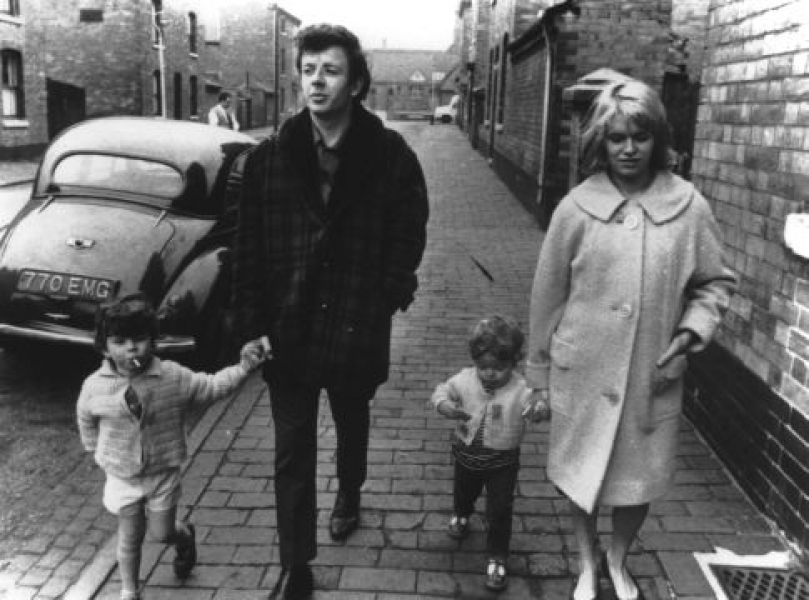
Cathy Come Home

We're all only a few paycheques away from the street, and the Ken Loach directed Cathy Come Home illustrates the point powerfully. Today marks 50 years since it was first broadcast as the BBC's The Wednesday Play on 16th November, 1966 and Cathy Come Home makes a timely addition to the Institute of Tenancy Culture Studies.
Cathy, Reg and the kids
Although it was based in England of the 1960s, the issues resonate strongly here today. Families make up increasing numbers of tenants. Insecure tenancy laws and precarious employment situations mean more families than ever live with the fear and the risk of losing their homes in the private rental market. Housing policies which rely on a poorly regulated private rental sector to house vulnerable people can only exacerbate that vulnerability.

The chief lesson taught by Cathy Come Home appears to remain unlearned 50 years after the film's release. Perhaps it is that we have forgotten it is both unfair and ultimately ineffectual to expect the people surviving the effects of a society's structural failures to simply overcome. This is as true in housing and homelessness as it is in gender issues, employment, or our ongoing relationship with Aboriginal and Torres Strait Islanders. The original owner-occupiers of Australia are now mostly living in rented housing and, recalling the final scenes of Cathy Come Home, children are being removed from Aboriginal families at far higher rates than any others.

The full film is available here, and runs for a little over an hour:


Thursday, March 31, 2016

Stopping the homeless "churn"

Minister for Social Housing Brad Hazzard has today announced "the NSW Government is taking a tough stance on the “churn’’ of people from social housing to homelessness and is driving reform for an automatic rent deduction scheme from Centrelink payments." The scheme would see money handed directly from Centrelink to Social Housing landlords - which sounds remarkably like a form of income management - and could affect up to 90% of Social Housing tenants.

Driving the proposed reform is the Minister's concern for children. “I see too many children who have had their lives upended, their schooling disrupted and their health compromised by their family’s inability to pay rent and maintain a secure home,” Mr Hazzard said. “There are times when Governments have to make decisions for the common good and that is why we are driving this across-the-board reform.”

But there's not a lot of evidence to suggest that children are becoming homeless in great numbers because of rent arrears in Social Housing. The Australian Institute of Health and Welfare's latest report into Australia's Welfare (2015) makes no reference to rent arrears in its discussion about child homelessness, pointing instead to "sexual and physical abuse, parental drug addiction and family violence" as likely triggers.

Still, if this is a problem, there are other ways of responding to it. Working with households to get their rent under control springs to mind, rather than evicting them. Our observation is that Social Housing officers can be quick to take off to the Tribunal for an eviction order without first sitting down to talk through whatever difficulties a tenant may be having - or even just finding out what the hold-up might be with the rent. When you're the tenancy manager for some of the most vulnerable low-income households in the country, this would seem a reasonable place to start. It seems all the more important for struggling households that include children.

It's not the first time a reform agenda of this kind has been driven, either. Here's what we said when a similar scheme was flagged back in 2013:
It might sound like a good idea to the Housing Ministers, because it promises to reduce arrears. And lots of public housing tenants think it's a good idea too – so good, in fact, that they already do it, voluntarily, through Housing NSW's Rent Deduction Scheme. 
But there are people for whom this sort of scheme doesn't fit. For example, we've an acquaintance who lives in public housing who has a few health problems. When he gets paid, he doesn't use the money to pay his rent straight away: he uses it to pay one of his doctors. Then he goes to Medicare, gets paid by them, pays another doctor, goes back to Medicare and gets paid by them again. Then he pays his rent. 
This orderly process of payment and repayment would get stuffed right up if a Housing Payment Deduction Scheme got in and took the money first. 
There's bound to be other examples where individual circumstances make the compulsory deductions a bad fit. Maybe the operational policy for the scheme could be so devised to anticipate them all, and provide for housing officers to make adjustments in those circumstances... maybe. 
Or it might be more efficient and effective to let each person judge for themselves whether the scheme fits their circumstances and whether it suits them to use it. Lots of public housing tenants have already judged yes, it suits them – that's great. And that's probably as far as it should go. 

Friday, November 6, 2015

Speak up, be heard!

"Landlords have a right to ensure their investment is protected and can generate reasonable returns. Tenants are entitled to suitable housing and reasonable rights to enjoy their home and not be evicted without prior notice."

So begins Fair Trading's discussion paper as part of the statutory review of the Residential Tenancies Act 2010.


Let's just let that sink in for a minute.

Landlords have a right to a protected investment that generates wealth.

Tenants are also entitled to rights, but nothing beyond the point of enjoying their home while they have one. The risk in the rental market, it seems, is all theirs.

People who live in rented homes deserve better than this. Not being evicted without proper notice is nice - but not being evicted without a proper reason is what we should be entitled to.

The number of people who live in rented homes is growing, and their profile is changing.

In our recent report on the Act, we pointed out that the proportion of households who rent in New South Wales has been steadily increasing for at least a decade. In 2001, 27.5% of private dwellings were occupied by renter households. In 2006 it was 28.4%, and in 2011 it was 30.1%. There are no signs that this trend is reversing - the population of renters in New South Wales is growing faster than the population in general.

We also know that the composition of renter households has changed over time. More people are renting for longer, and more and more families with children are making their homes in the rental market. In 1981, the proportion of Australian renter households who were families with children was around 26%. In 2011 it was closer to 40%.

Fair Trading's discussion paper also notes the changing profile of the NSW rental market:
Historically, renting has been viewed as a short-term housing option - a stepping stone to home ownership. Today, people are renting for longer. According to figures from the Rental Bond Board, in the last ten years there has been a 7.2% increase in the number of tenancies lasting longer than 3 years. A corresponding decrease of 5.2% was recorded for tenancies of less than 6 months.
These statistics paint a clear picture - more people are renting for longer in New South Wales.

But pointing out the statistics doesn't always get us very far. If we are to challenge the view that tenants are merely entitled to enjoy their homes while they have them - rather than feel some basic level of security within them - then we need to do more than recite statistics.

Tenants need to find their voice.

Download and read Fair Trading's discussion paper. Circulate it amongst family and friends. Talk about it. Think about it. Respond to it.

Let them know you're out there. Let them know that you are a person, not a statistic. Let them know what you think of renting in New South Wales. Your experience is valuable.

Fair Trading has set up an online form where you can answer some or all of the questions they've raised in their paper - find it here.


Monday, October 20, 2014

Children in rental housing

It's NSW Children's Week 2014, and on Wednesday Australia observes Universal Children's Day. Both are occasions to 'celebrate the right of children to enjoy childhood' and to 'consider those conditions in society which affect the lives and future of our own children.'


About a quarter of all persons living in rental housing in New South Wales are children aged 14 years and younger. The rate is even higher amongst Aboriginal households: about half of all Aboriginal persons living in rental housing are children (14 years and younger).

The NSW State Government promotes NSW Children's Week and Universal Children's Day, and we'd like it to keep in mind how these children may be affected by tenancy laws.

In particular, when the government allows tenancies to be terminated without grounds, on 90 days notice (or just 30 days notice, when at the end of a fixed term), it makes the housing of children needlessly insecure.

And when, as the landlord of the State's 110 000 public housing tenancies, it thinks about 'getting tough' and evicting tenants, it should consider that they are getting tough on vulnerable children too. 

We're thinking in particular of where there's been a 'use of the premises for an illegal purpose' – most often, but not always, drug offences. Housing NSW already undertakes 'illegal use' termination proceedings, including where it means people not involved in the illegality – including kids – may lose their housing. Under the current law, you can at least ask the Tribunal not to terminate, considering the circumstances of the case (eg kids would lose their housing; court has seen fit to order non-custodial sentence; offence not actually committed by tenant), and the Tribunal will make up its own mind. 

We understand, however, that the NSW State Government is currently considering a proposal to change the law in this regard, such that when Housing NSW takes these proceedings, the Tribunal would have no choice but to terminate. This change would produce serious injustice, particularly where children and other blameless persons would be evicted into homelessness. 

Thursday, August 21, 2014

Families renting – part 2

Some more figures on families who live in rental housing, courtesy of Brown Couch numbers man, Leo.


Of all families* in New South Wales:
  • just under one quarter (23.9 per cent) of them live in private rental housing; and
  • another five per cent live in social housing; so
  • in total, 28.3 per cent of families rent.

Of single parent families in New South Wales:
  • 35.3 per cent live in private rental housing; and
  • another 11.8 per cent live in social housing; so
  • in total, just under half (47.1 per cent) of single parent families rent.

* families with dependent children (see yesterday's note).

Wednesday, August 20, 2014

Families renting

Our Victorian colleagues, the Tenants' Union of Victoria, are in the media today with some research into the growing proportion of families with children who live in rental housing.


For your info, Brown Couch number-cruncher Leo has pulled out from the 2011 Census the equivalent figures for New South Wales*:

Private rental households (NSW), 2011

Single                     25.3 per cent
Couple                    19.8 per cent
Family                    41.5 per cent
Group                       9.6 per cent

In fact, almost a quarter of all persons living in rental housing in New South Wales are aged 14 years or younger.

The problems of unaffordable rents and insecurity of tenure – not to mention restrictions against growing households – affect not just the adults who sign the leases, but children too.

* The Census, properly, refers to couples without children as a type of family. For consistency with figures as presented in The Age, we've accounted for them under the category 'Couple', separate from the category 'Family', which here means family with dependent children.

Wednesday, September 11, 2013

Tenancy culture study: Hood's 'Eviction at Hurstville'

Sam Hood was an Australian photographer whose career spanned the late nineteenth century to the middle of the twentieth century, during which Hood did a bit of everything: news, sports, portraits, weddings, funerals. In 1935 he photographed an eviction, and created the subject of today's tenancy culture study.

(Sam Hood (1935) 'Eviction at Hurstville')

It is a subtly powerful image. Without histrionics or sentimentality, the image quietly commands the viewer's attention and directs it to meet the gaze of the evicted woman. You might, after a moment, look elsewhere about the image, and pick up some clues as to the woman's circumstances – the thin cotton dresses, the home-cut hair – but again your attention will be drawn to face her directly, separated by a gulf of decades from the woman, but also face-to-face with the indignity and injustice of eviction.

The woman's eviction was one of about 5 500 for which New South Wales courts made ejectment orders in 1935. As a matter of law and practice, renting then was, in many ways, quite different from renting today. Just under half the population rented (in Sydney, it was just over half). There was no Residential Tenancies Act. It was common at the time for tenancies to be for a period of one week, with the same period of notice for termination.

Over the preceding decades, there had been a number of attempts to reform tenancy law, with mixed results. In 1915, the NSW State Labor Government introduced the Fair Rents Act, which allowed tenants to apply to a magistrate to determine, according to the formula in the Act, the fair rent for their tenancies. In 1920, the Fair Rents Act was amended to prohibit discrimination against prospective tenants who had children; in 1926, it was amended again, to provide for termination on just causes only, such as non-payment of rent, use of the premises for 'an immoral or illegal purpose', or because the landlord required the premises for themselves or a family member.

These reforms didn't last; in 1928, a conservative NSW State Government amended the Act so that it would not apply to new buildings and, by midyear 1933, cease to have effect altogether. We can assume that the woman Hood photographed was evicted for not paying her rent, but as far as the law of the day was concerned, her tenancy could be terminated regardless of the reason.

Another short-lived reform: in 1931, as a response to the drastic deepening of unemployment, rent arrears and evictions in the Great Depression, the State Government (back to Labor again) introduced the Ejectments Postponement Act, which provided for the postponement of evictions where the tenant pleaded that they were impoverished through no fault of their own. It was not wholly effective: apart from the question of making the 'impoverished' argument, tenants could still be required, as a condition of the postponement, to pay compensation to the landlord and, until amendments were passed, the Supreme Court considered that it was not bound by the Act and could continue making ejectment orders. In 1932, the State Government (conservative again) legislated so that by the end of 1935 the postponement provisions would cease to have effect. In any event, they did not prevent the eviction of the woman in Hood's photograph, nor the thousands of others evicted from their homes the same year.

There was one enduring reform from this period: the abolition of landlords' old common law remedy of 'distress', whereby a landlord could enter a rented house and seize the tenant's belongings, to ransom or keep in satisfaction for unpaid rent. Distress had been legislatively chipped away at since the 1890s, and was finally abolished in 1930.

The woman in the photograph, therefore, might have been able to keep such belongings as she had; but she would have had few, bleak options for alternative accommodation. In 1935 there was scarcely any public housing in New South Wales. There was Daceyville, on which work had terminated prematurely in the 1920s, and Millers Point, and a few buildings constructed by the City of Sydney in Pyrmont (Ways Terrace) and Chippendale (Strickland Flats); but even these were for relatively well-paid workers, not poor and homeless persons. For the evicted, there was family, or charity.

*

There is, of course, another person in Hood's photograph: the woman's daughter. Her attention is elsewhere, caught by something beyond the frame of the image. We might look beyond the circumstances of the eviction too, to what would lie ahead for her, in terms of her housing.

Soon, renting laws would be reformed again: in 1939, on the outbreak of the Second World War, the NSW State Government resurrected the Fair Rents Act (ironically, it was the conservative government that did it). First under this Act, then under Federal Government war-time price regulations, and then under the Landlord and Tenant (Amendment) Act 1948, tenants were protected by strong legal protections against unfair rents and terminations. By the 1950s, however, by which time the girl in the photograph would have been a young woman, the 1948 Act was being legislatively curtailed, with fewer and fewer premises subject to its controls.

She may have found secure rental housing in public housing. Following the establishment of the NSW Housing Commission in 1942, and the Commonwealth-State Housing Agreement in 1945, the previously meagre public housing sector grew rapidly: to 1956, about one in six dwellings built in New South Wales was built by the Commission.

It's more likely that she would have found secure housing in owner-occupation. The prospect must have seemed dim in 1935, but after 1945 the rate of home ownership leaped, and kept growing until it peaked above 70 per cent in the mid-1960s, as more people whose families had always rented got into home ownership.

They got there on one or more of a range of things: full-employment; war service home loans and other government subsidies to housing finance; a burst of owner-building, particularly directly after the war; sales of rental properties by landlords chaffing under the 1948 Act; and after 1956, a huge program of sales of public housing to tenants and applicants. By the end of the 1960s, when the girl in the photograph had probably settled down with a family of her own, the Housing Commission had sold one-third of all the dwellings it had ever built.

If she is still alive today, the girl would be in her 80s. If she's like most 80-year olds, she'd still be living at home (at the Census, about one in five persons aged 80 and over were in aged care facilities and other non-private dwellings) and if still at home, the chances are very strongly that its owned by her or her family: about 88 per cent of those aged 80 and over live in owner-occupied housing. About seven per cent of 80 year olds live in social housing; just 4.5 per cent rent privately (of whom a small handful – a few hundred – are still covered by the 1948 Act).

The more things change.... For some time now, particularly for young households, home ownership rates have been declining. Public housing is in a spiral of decline so severe that it is undermining the continuing viability of the system. Today, almost 26 per cent of the population rents privately, and the proportion is growing (it's up 30 per cent on the proportion of privately renting just 15 years ago). For 25 years we've had a Residential Tenancies Act, but landlords can still give tenants termination notices without grounds. In 2012-13, the Consumer, Trader and Tenancy Tribunal issued 3 703 warrants to evict tenants.      


Thursday, July 25, 2013

Congratulations to tenants William and Catherine

The Brown Couch congratulates tenants William and Catherine, the Duke and Duchess of Cambridge, on the birth of their son and future Australian monarch, George.


Their Royal Highnesses rent their home, a farm house on the Isle of Anglesea, off the coast of Wales. (Although, according to reports, the young family is shortly to move to new digs, with some help from William's gran.)

As a renting family, their Highnesses are in good company amongst subjects in New South Wales too: here about 40 per cent of rented houses are homes to children.

In fact, about a quarter of all people living in rented houses in New South Wales are children under the age of 14 – and almost half of all Aboriginal people living in rented houses in New South Wales are kids.

Best wishes and good luck to William, Catherine and George, and all the other parents and kids trying to make a home in rental housing.

Wednesday, March 13, 2013

NSW State Government to act on window safety

The NSW State Government has today promised that it will implement the recommendations of the Children's Hospital at Westmead and enact legislation to address window safety – and in particular, the awful problem of children falling from windows in apartments.


This is great news – congratulations to the NSW State Government and to Fair Trading Minister Anthony Roberts, who will be responsible for the legislation.

In particular, the Government says the new laws will require the installation of window safety devices on windows in residential strata schemes, and include a new item about window safety devices in the standard condition report for residential tenancies. The Government is asking for public comment on the precise details of the reforms.

The TU supports the measures proposed, and will be suggesting a few more changes to ensure there are no gaps in the reforms. For example, while most tall residential buildings are in strata schemes, some are not: there's blocks of flats that have a single owner – notably, social housing owned by the NSW Land and Housing Corporation – and blocks that are in a company title scheme. These sorts of buildings should be subject to the new laws too.

Monday, February 25, 2013

Window safety: more action needed

A two-year old boy has fallen 13 metres from a flat in Eastwood, in suburban Sydney. He's now in a stable condition with possible internal injuries, in the intensive care unit at Westmead Children's Hospital. We're crossing our fingers for him and thinking of his family.


As the linked article reports, changes to the Building Code of Australia mean that from May this year new buildings must have window-limiting devices installed on windows more than two metres above a surface: that is, locks that can lock open the window at not more than 12.5 centimetres, or bars, or reinforced screens (not flyscreens).

These changes are good, as far as they go – and they go nowhere to addressing window hazards in existing buildings.

Back in 2005, the NSW State Parliament addressed a different threat to life and limb when it passed legislation requiring smoke alarms to be installed in all residences – new and old.  This important safety measure has been implemented throughout the State without any serious hassles.

For the sake of the 40 or so children who fall from residential buildings each year, we should take the same approach to window safety. 

UPDATE 27/3/2013. Jeremy, the boy who fell, is reported to be doing remarkably well. We wish him continued good luck!

Tuesday, November 20, 2012

Sick of over-regulation (part 2): restrictions against additional kids and other occupants

We've always said that the prohibition on keeping a pet without the landlord's consent is the most bothersome term commonly seen in tenancy agreements (even more so than the term requiring you to inform your landlord of any infectious disease you might contract).

But there's another contender: the term that sets the maximum number of persons who may live at the premises. 

Fair enough that landlords don't want their premises being let in lodgings to sundry others and becoming overcrowded. But the term for a maximum number of residents is misused, and unreasonably restricts tenants when they're making personal decisions about their households.

First, most landlords and agents set the maximum at the same number of persons in your application for the tenancy – without regard to the size of the premises, and without regard to whether a household might reasonably grow. There's nothing in the Residential Tenancies Act 2010 that says the maximum number must be reasonable, and nothing that allows a tenant to get an unreasonable restrictive maximum varied.

If a tenant wants it varied – say, to accommodate an additional child – they must ask the landlord's consent.


We're aware of a case where a couple wanted to foster two kids. They asked the landlord – because they were two persons in a five-bedroom house, and the maximum number of occupants allowed was – yes you guessed it – two. The landlord refused consent.

And if a tenant goes forth and multiplies without their landlord's consent, the landlord can serve a termination notice, and go to the Tribunal for a termination order, on the grounds that the tenant is in breach.

We're aware of a case where a tenant (initially with two kids, in a three-bedroom house: maximum three occupants allowed) came to an arrangement with her ex-partner for shared care of her third child, a kid with a disability – both stayed a few nights each week. During an inspection the landlord was disconcerted to discover the third child, and a bed made up in the lounge room (the tenant asks: 'do you expect me to share a bed with my ex-partner?'). The landlord gave a termination notice and applied to the Tribunal, where the tenant – humiliated – was questioned as to who she has to visit her and for how long.

In the end the Tribunal declined to terminate the tenancy, and said it was okay for the ex-partner and the additional child to be at the premises – provided it was temporary. It then made a specific performance order that the tenant not allow persons in excess of the maximum to live at the premises.

Most landlords aren't interested in interposing in tenants' private, personal household arrangements – but where it happens, it is grossly offensive. Our position is:
  • let landlords have their term for a maximum number of residents – provided the number is reasonable, considering the size of the premises and number of bedrooms; and
  • let tenants go to the Tribunal for an order varying the maximum number if it is unreasonable, or if it restricts a child from joining the tenant's household.