Showing posts with label Millers Point. Show all posts

Friday, November 9, 2018

The sale of Millers Point properties has ended: it has made inequality worse

The view from the old Workers Flats in High Street, Millers Point

End of the Millers Point sales program

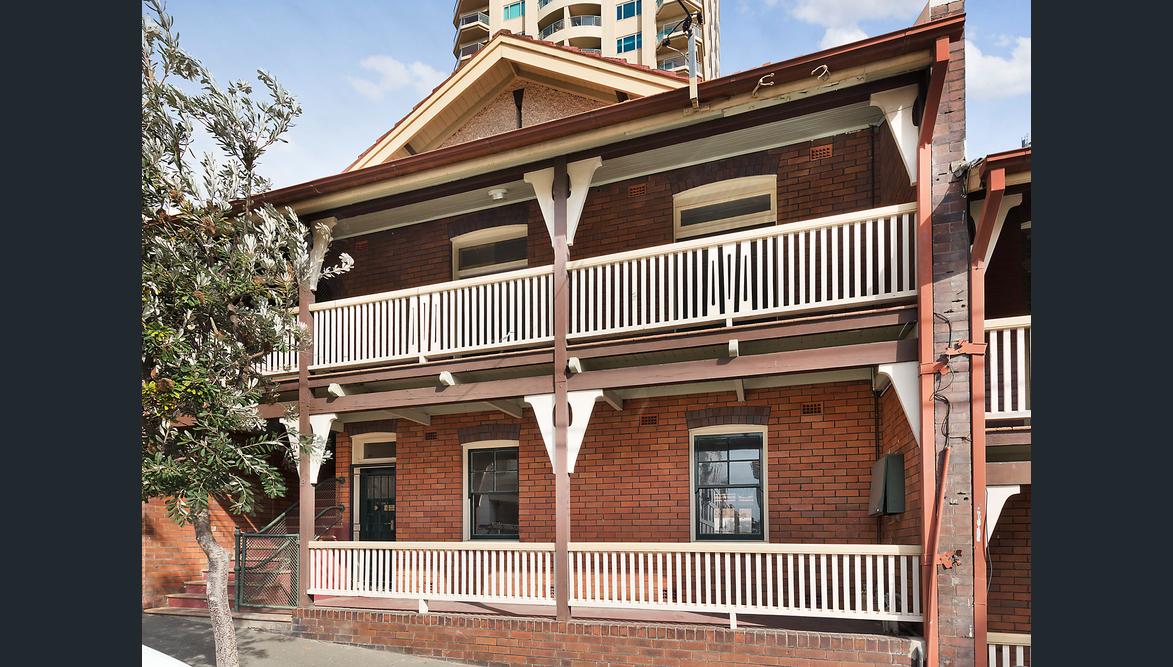
With the sale of the final two terrace houses on Saturday, 3 November 2018, Property NSW announced the end of the Millers Point sales program. Announcement of the successful tender for the sale of the Sirius building is expected any day now.

We'll take this moment to reflect on a number of ways to remember this chapter.

On 19 March 2014 the Hon Pru Goward, Minister for Family and Community Services, announced that ‘high value public housing property assets on the Sydney Harbour foreshore will be sold with the proceeds to be reinvested into the social housing system across NSW’. You can check out her media release at the time here. It said that relocating the residents and sales were expected to be completed within two years. In April 2015 the NSW Government placed a figure of $500 million on the projected estimate of proceeds.

Since the Minister’s initial announcement the Tenants’ Union of NSW has repeatedly called on the NSW Government to allow tenants to remain, especially the elderly and those with strong links to the area. A campaign to allow residents to stay was not successful, other than a handful who remain in properties where the sales have been deferred.

Also, very soon after the announcement, the film-maker Blue Lucine started recording the community's efforts to resist the sell-off. The resulting documentary called 'Eviction' is a powerful record of the way this sad attack on Sydney's heart was carried out. We are privileged to have been present at screenings of 'Eviction' with members of the community. The next viewing will be at Parliament House in Macquarie Street on 20 November 2018.

By December 2016 the NSW Government had sold 133 properties for $349 million. By that time we had started predicting that total proceeds from the sale were going to hit $680 million, well in excess of the $500 million. We and the community argued that this gave the Government the ability to retain some of the housing, particularly the Sirius building.

At the time of the third anniversary of the announcement to sell all public housing properties in Millers Point, we were saying:
'Come on NSW Government, allow the remaining older residents a real choice'. This may be ageing-in-place in their current homes and, an alternative that is supported by the residents, retain some of the units within the Sirius Building and some of the workers cottages for a semblance of a social mix. It's not too late! A win-win situation! You'll make your money and older residents still there can stay.
Our and others' pleas fell on deaf ears.

With the sale of the final two terrace houses at the beginning of November 2018, our records show that total proceeds from the sales of 189 properties is $609.6 million. One real estate agency, McGrath Real Estate, has been responsible for sales totalling $518.9 million.

The median price was $2.5 million. Prices ranged from $1.4 million for a terrace house to $26 million for a flat complex. On top of this, the NSW Government has collected a bonus of $33 million in stamp duty (not counting the stamp duty on subsequent sales).

The figure of $609.6 million excludes the sale of Sirius building and the deferred sales of the 28 units set aside for existing tenants. Estimates in the media for the sale of the Sirius building range from $120 million up in May 2018 to $150 to $180 million in August 2018. This leads to an estimate of the total windfall from sales of over $760 million.

Proceeds from the sales

As of September 2018, the NSW Government reports here that a total of 1,121 residential units for social housing had been completed and a further 260 residential units were under construction using proceeds from the Millers Point sales program. It is unclear whether it is accurate to characterise these dwellings as funded from Millers Point sales - the required level of transparency to assess the claim does not exist. There are also inconsistencies with these claims.

In April 2015, the NSW Government projected proceeds of $500 million. They also said the money would be 're-invested into some 1500 new social housing dwellings, allowing more people on the waiting list to be housed faster'.

Today, although the proceeds have climbed more than 20% higher to over $600 million and another 30% to over $760 from the sale of the Sirius building all but guaranteed, the government is stating that only 1381 homes have either been built or been funded. Based on the original claim in 2015, we should be seeing 1800 properties built or funded already, with a further 500 or so in the development pipeline. This discrepancy has not been accounted for.

Regardless, in March 2018 we wrote here that the construction of new dwellings from the proceeds of sales of Millers Point properties represents small growth only in provision of new social housing stock across NSW.

We also have argued that the NSW Government is wrong to cannibalise existing public housing stock to build new social housing dwellings. This is especially at a time when the NSW Government has a budget surplus of over $4 billion. Indeed, Hal Pawson from the City Future's Research Centre at the University of NSW concludes that none of this booty has been channelled into expanding social and affordable provision. He argues that Housing NSW is overselling its social housing commitment.

The residents

And what of the residents who were forced to relocate? The film 'Eviction' highlights this in a visceral way. The obviously strong ties in the community - with neighbours caring for each other as if family - makes the separation from community all the harder to watch.

A Swedish study by Danermark, Ekstrom and Bodin found premature deaths amongst older residents forced to relocate. (This study is cited on page 70 of Cred Community Planning’s ‘Social Impact Assessment of the potential social impacts on the existing Millers Point community, and the broader social housing system, that may result from the sale of any further Social Housing in Millers Point’, prepared for the NSW Land and Housing Corporation in 2013.) Time may well show that this also is the case with Millers Point. We are aware of at least two suicides and other recent deaths.

Professor Alan Morris of University of Technology Sydney interviewed residents leading to a report for Shelter NSW which is discussed here and here. Professor Morris argues that 'place' attachment was profound and the removal announcement and the actual move were devastating. Those whom he interviewed spoke of deep sadness and anxiety at the thought of leaving. Residents who had moved told of their isolation and melancholy at having lost their social network.

We have argued that the forced relocation of residents of Millers Point highlights the failings of Government when only lip service is given to ‘ageing-in-place’. In 2015 and 2017 the Tenants' Union of NSW made submissions to Elder Abuse Inquiries of both the NSW Legislative Council and the Australian Law Reform Commission (ALRC) here and here. We argued that a government policy, in itself, may constitute a form of elder abuse. We submitted that the NSW Government’s decision to relocate all the social housing tenants in the suburb of Millers Point is an example of systemic elder abuse.

In October 2017 Professor Morris published an article in The Conversation called 'Last of the Millers Point and Sirius tenants hang on as the money now pours in'. Here, he argued that the NSW Government may be patting itself on the back for generating hundreds of millions of dollars by displacing the public housing tenants in Millers Point and the Sirius building. However, it's actions were the planned, deliberate and irreversible destruction of an historic community. The primary focus was on revenue and expenditure. The human costs of policy making were pushed to the side.

On 14 November 2018 Professor Morris will be launching the book entitled Gentrification and Displacement: The Forced Relocation of Public Housing Tenant in Inner-Sydney, Springer, 2019. Professor Morris draws on in-depth interviews and examines the forced displacement of public housing residents in Millers Point, Dawes Point and the Sirius building in The Rocks, and considers the build-up to the government deciding to relocate the residents, strategies deployed to pressure tenants to move, as well as the social and personal impacts of the displacement.

One of the most powerful lines in the film 'Eviction' has a main protagonist pondering who will live in his home when he's gone. So who are the new residents? We have glimpses: it's turned from struggle street to billionaire's rowmodel/author and partner from family of merchant banker have come and gone; 'it’s again the home of a gentleman'. And, of course, 'Kent Street' now is known by some as 'Rent Street', because of its many Airbnb listings.

Recently, Rupert Legg of University of Technology Sydney published an article in The Conversation, called 'Making developments green doesn’t help with inequality'. He linked the development at Barangaroo with the plight of the residents of Millers Point:
The NSW government announced the sales [in Millers Point] after Barangaroo’s effect on the surrounding areas began to take place, realising the increased profit to be made. As a result, the development is not only exclusive on the inside, it has also contributed to the displacement of the disadvantaged from surrounding areas. ... Barangaroo is a missed opportunity: instead of promoting social equality, it has made inequality worse.

Thursday, June 21, 2018

A longer lease on life: issues for older renters

With a surplus of $3.9 billion for 2016-17, the 2018 NSW State Budget had its winners and losers. The latter include seniors and renters. This blog examine some of the issues confronting older renters.

How does one define 'older person'. There is a helpful discussion of the definition of 'age' in the Australian Law Reform Commission's Discussion Paper on 'Elder Abuse'. Paragraphs [1.33] and [1.36] read:
The idea of someone being an ‘older’ person is a relative concept — chronologically, medically and culturally. It does not have a precise definition and specific ages may be used for particular purposes. For example, the Australian Bureau of Statistics (ABS) groups people into population age cohorts, and differentiates between ‘15 – 64’, ‘65 years and over’ and ‘85 years and over’. People over 65 are generally classified as ‘older’ for ABS purposes.
Family and Community Services’ NSW Ageing Strategy 2016-2020 (pp 26-28) identifies older people’s ability to live in affordable, accessible, adaptable and stable housing as a priority of the NSW Government. It asserts:
... older people increasingly prefer to ‘age in place’ and grow older in their own communities – close to friends, family and services.
The NSW Government does not have an explicit ‘ageing-in-place’ policy. Certainly, it would be worthwhile implementing an explicit policy and, further, establish benchmarks against which wider Government policies can be measured regarding consistency. The value of this will become obvious further into this blog.

Nevertheless, a number of significant documents commissioned as part of the NSW Ageing Strategy refer to it, where a basic principle underlying it being that older people know what is best for their own lives and have the right to make decisions on their own behalf. An ‘ageing-in-place’ friendly policy provides the incentives for individuals to remain living in a community to which they have a strong attachment, either in their existing residence or alternate accommodation, with service supports.

Dire circumstances

Alan Morris’s book entitled The Australian Dream: Housing Experiences of Older Australians draws on the stories of 125 Australian pensioners and compares their experiences with the trends and needs of an ageing Australia. He probes the growing divide between older private renters, those who live in social housing and pensioners living in their own home. Here's an excerpt about private renting:
It's like a pressure cooker. You don't know where to go or what to do.' ... 'It was so desperate, the search for affordable accommodation, that I went down with a heart thing and was rushed to hospital.
On 26 October 2016, quoting from Alan Morris's publication, Jennifer Duke says that at least 100,000 older Australians in the private rental sector are living in 'dire circumstances' ... and this figure is expected to grow substantially if current policies and approaches to housing affordability aren’t changed.

On 12 December 2016, Alan Morris penned an article for The Conversation entitled ‘Why secure and affordable housing is an increasing worry for age pensioners’. He writes:
An increasing proportion of older Australians on the age pension will be dependent on the private rental sector in coming decades ... and the prospects for this group are grim.
An increasing number of older women in the private rental market face homelessness and have been described as ‘the new face of poverty. Read an article called ‘Older renters: the new face of poverty’. It reads:
The evidence mounts. The number of older, single women in the private rental market increased by a massive 50 percent between the 2006 and 2011 ABS Censuses.

The private rental sector across Australia has grown in size and significance in the last 30 years. Between 2001 and 2010 about 1.7 million Australians dropped out of home ownership and shifted back to renting. More than one in three did not return by 2010.

Private rental now provides long term tenancy for a growing and diverse number of Australian households. If large numbers of long term renters aged 45-64 years remain in the rental sector, they could swell the number of long-term private renters aged 65 years and above quite substantially in the coming decades.

Many older women experiencing a housing crisis or homelessness have led conventional lives and never previously had a housing crisis. As private renters, especially in tight housing markets like Sydney and some regional centres, they are at great risk of unaffordable rents, insecure housing, eviction and homelessness.
Also, an excellent essay by Anwen Crawford picks up this same theme. She writes about 'Nowhere to go – older women and housing vulnerability’ and finds:
The number of older women who are rental tenants in Australia is growing, and these women ... are increasingly vulnerable to poverty and homelessness ... Housing affordability and security for rental tenants will only become a more pressing issue as Australia’s population continues to age. And with more people unable to afford to buy a home, changes to housing policy now will help to determine the living conditions of tenants in the future.
2016 Census

The 2016 Census found a significant increase in the number of people renting in New South Wales. Indeed, there was a slight shift away from home ownership towards renting. There were 826,922 renter households at the 2016 Census, which was 83,870 more than there were in 2011. To put this into context, that's almost double the increase we saw between 2006 and 2011. It also means our renting population has gone up in percentage terms since 2011, too - from 30.1% to 31.8% in 2016. It also means that more people are renting for longer. Read more here. On top of this, Australia’s population is ageing. Those aged 65 years and over now account for 16% of the total population, compared to 14% in 2011. The median age has increased to 38 years, after remaining at 37 years for the past decade. Read more here.

Following the release of the 2016 Census, there have been a number of reports highlighting the problems of life-long renters.

In March 2017, The New Daily examined the most recent population statistics. Australia is ageing and life expectancy is greater. The stats show that from 2012 to 2016, the proportion of the Australian population aged 65 and over increased from 14.14 to 15.27 per cent.

Kirsten Robb writes: 'Life-long renters face financial stress in retirement'... according to a paper by Swinburne University, which found more Australians are renting in retirement and facing financial stress. The report that she refers to is one by Andrea Sharam, Liss Ralston and Sharon Parkinson of Swinburne Institute for Social Research. They found:
The proportion of aged persons in Australia is set to increase significantly, posing many challenges. Amongst these is the growing number of households who lack housing security in retirement. ... Our findings indicate that social change, and adverse ‘critical life events’ have significant impacts on households by and at midlife, and beyond. Of particular concern is that the housing market itself is a key source of wealth accumulation and dispossession. A very marked outcome is that to be private renter at 45 years of age is likely to mean being a renter and highly impoverished, in retirement.
Teresa Somes of Macquarie University writes for The Conversation: 'More and more older Australians will be homeless unless we act now.'

Eileen Webb and Gill North write: 'Suitable, affordable housing is key to our population ageing well'.

Ben Phillips of the Australian National University writes for The Conversation:
... the more pressing social problem for Australia remains the lack of affordable rental housing for lower-income families that is close to jobs and services in our capital cities. ... An ageing population with potentially lower home ownership rates will add to this problem in future years.
And Ned Cutcher of Shelter NSW writes that more people are renting much later into life.

More recent media

You will find recent media coverage, reports and publications on older renters in this document.


What is the reality for older renters?

Various words have been used to described the plight of older renters: Overlooked, A distinct financial disadvantage, Condemned, Vulnerable and Financial stress … and that’s just for starters.

As discussed above, there are many issues confronting older renters. So here's my summary:
  • Weak security of tenure. True for all renters, but compounded if you are older ... check out Choice’s publication entitled ‘Unsettled’. Read about it and find a link here. Also, check out the ‘Make renting fair’ campaign. Indeed, Australia fairs poorly in an international comparison of security of tenure for renters.
  • Only token acknowledgement of ‘ageing in place’ ... The redevelopment of old public housing estates poses real hardships for many older tenants. The forced relocation of residents of Millers Point in inner Sydney highlights the failings of Government when only lip service is given to ‘ageing-in-place’. Read the blog in The Brown Couch here. In 2015 and 2017 the Tenants' Union of NSW made submissions to Elder Abuse Inquiries of both the NSW Legislative Council and the Australian Law Reform Commission (ALRC) here and here. We argued that a government policy, in itself, may constitute a form of elder abuse. We submitted that the NSW Government’s decision to relocate all the social housing tenants in the suburb of Millers Point is an example of systemic elder abuse.
  • Restricted access to home modifications ... private landlords have little incentive to modify properties to suit the needs of older tenants. Older renters are forced to move as dwellings are no longer appropriate to their needs and residential tenancy legislation fails to adequately address this. Here’s the current state of play.
  • Residential land lease communities (also called ‘residential parks’) as an alternative for older people ... Today business is viewing residential parks as money-making ventures, with some being promoted as an alternative to retirement villages. But, homes in residential parks, once seen as a cheaper option, now are regularly sold for amounts over $300,000. Indeed in 2016, two on the North Coast of NSW sold for over $1 million. Residents may own their home, but they do not own the land and remain vulnerable should the park be sold from under them.
  • Pets is an issue with particular meaning for older tenants. Check out this site. Recently, there has been increased media coverage of this issue in Australia. Read Wendy Squires’ article called 'Landlords, have a heart and let your tenants have a pet'. The Tenants Union of NSW wants to see the decision to keep pets to sit with the tenants rather than the owners.
What can we do?

For an excellent discussion on what to do in order to address the more dire needs of older renters, check out the 'Ageing on the Edge’ report released on 29 November 2017. It contains thirteen recommendations that the NSW Government can act on now. The Tenants’ Union of NSW is represented on the ‘Ageing at the Edge’ Working Group in NSW. You will find a summary of the report here and the full report here.

Postscript on 26 July 2018

Here's three new links which are food for thought ...

Allison Worrall writes: 'Choice of food or rent: Housing crisis deepens.' Read her article here.

Isabelle Lane writes: 'Older Australians are falling off the housing ladder and face spending their retirement as renters, with the situation expected to worsen for coming generations.' Read her article here. You may check out Grattan Retirement Incomes Model (GRIM) here.

AHURI provides an excellent analysis of the situation facing older low income tenants in the private rental sector. This link also points to some current research. Check it out here.

Friday, June 15, 2018

The numbers near the end of the Millers Point struggle: 28, 42 and 200 million


Backyards in Kent Street, Millers Point: Mrs Mac feeding cats, washing blowing on the line, 1985 © Susan Dorothea White

Our title juxtapositions the numbers 28, 42 and 200 million! What is the significance of these numbers? Well, these are the end days of the Millers Point struggle and, in a recent article, Patrick Begley (The Sydney Morning Herald, 11 June 2018, p1) headlines his electronic copy: 'Sally has 28 days to leave her home of 42 years.' But he uses a different heading in the hard copy: '$200m bonus from Millers Point sale'. Let's tell the stories behind these numbers.

28 and 42

In March 2014, the NSW Government decided to evict all the social housing tenants in Millers Point and the Sirius building in The Rocks. To date, 578 tenant and household members in 398 tenancies have been forced to vacate their homes, with one lone surviving tenant. On 7 June 2018, the Supreme Court ordered this tenant, Ms Sally Parslow, to vacate her home within 28 days (by 5 July 2018). Having rejected Ms Parslow's claim to a life tenancy on her home, Justice Guy Parker found that he had no option but to give her only 28 days to vacate her home. (See Paragraphs 203 to 207 of his published decision.)

The time period of 28 days is a by-product of the Government's anti-social behaviour legislation. The short time period is due to the operation of s154G of the Residential Tenancies Act 2010. This section was an amendment which formed part of the Residential Tenancies and Social Housing Legislation Amendment (Public Housing - Antisocial Behaviour) Act 2015, but it flows on to all social housing (including community housing) tenants before a court or Tribunal, even though their eviction has nothing to do with anti-social behaviour. This section requires a possession order to take effect in 'no more than 28 days', unless there are 'exceptional circumstances justifying a later day'. At law, the words 'exceptional circumstances' have a very high bar. This phrase occurs nowhere else in the Residential Tenancies Act 2010 nor its Regulations. It is most commonly used in criminal law matters.

The home had been Sally's for 42 years but speaks to the much longer history of the area and property Sally lives in and others in the area. The judgment describes the history in some detail, and is worth reading. Briefly, the home had been built between the 1840s and 1860s as accommodation for wharf workers. At the turn of the 20th century the government acquired the properties and for nearly a century, first under the Sydney Harbour Trust and later the Maritime Services Board, there were 60 boarding houses run as commercial enterprises. People like Sally used the premises as their home, but also took on both management and risk of running the business. Here's the story told by one daughter of Millers Point. The cost of building the premises never touched the government purse, and even maintaining the premises was with the resident boarding house operators like Sally until 1985.

$200 million

At today's date, there had been 180 sales raising $570.7 million, plus stamp duty of $30.8 million. You can check these sales here. In keeping with requirements outlined in the Government Information (Public Access) Act 2009, NSW Property keeps a record of all contracts, including property sales over $150,000 in a Property NSW Contracts Register. These are published and details must remain on the register for 20 working days, or until the contract is complete, whichever is longer. Go to here and click 'PNSW - Government Contracts Register'.

Altogether, 26 properties are still to be sold. 16 properties (comprising 4 sales) in High Street are currently on the market. A further 2 properties in Lower Fort Street are yet to be placed on the market. 8 properties (comprising 2 sales) in Dalgety Road apparently have been withdrawn from sale. The Sydney Morning Herald article refers to 'a final 11 lots are due to be sold this year, including the historic apartment building Sirius'.

In November 2015, the then Minister for Social Housing, Brad Hazzard, set aside 28 properties for remaining tenants and household members.  By late February of this year, 21 were occupied by 19 tenancies. Of the remaining 7 units, 1 is on hold and 6 remain unallocated. The Government will receive a big thank-you if it gives some of the previous residents, who were relocated but now isolated and lonely, the option of taking up the unallocated units.

But Millers Point has changed forever 'from struggle street to billionaire’s row'. You can read the promotions for the 'Workmen's Dwellings', one of the refurbished block of apartments, here (Domain: New Living, The Sydney Morning Herald, 18-19 May 2018 pp 14-15).

A conservative estimate of the total funds from sales to date (which excludes the Sirius building and 28 units where sales have been deferred) is $596 million. The real estate industry estimates $120m plus from the sale of the Sirius building. This provides an estimate, all round, of $716 million. Patrick Begley writes:
When the government announced in 2014 it would sell off social housing in inner-city Sydney, it predicted sales of about half a billion dollars. But Justice Guy Parker, summarising evidence from two [NSW Land and] Housing Corporation witnesses, found "the revised estimate is that $700 million will ultimately be received."
(This quote comes from Paragraph 145 of the published decision.)

You can check an update of FACS Housing webpage for how the proceeds have been spent. We previously wrote an article about delving behind the figures for new social housing dwellings here. Hal Pawson from the City Future's Research Centre at the University of NSW provides a critique, arguing that Housing NSW is overselling its social housing commitment. You can read his analysis here. He concludes:
Thanks to the property boom of the past few years, government has enjoyed a massive revenue bonanza through stamp duty income ... the actual stamp duty income recorded in recent years has amounted to a windfall of no less than $18.25 billion in excess of that “counter factual” revenue. And yet none of this booty has been channelled into expanding social and affordable provision ...
Returning to the title of this article. The Supreme Court gives the sole surviving tenant of Millers Point 28 days to vacate, after 42 years in her home and the Government stands to exceed its expected takings by $200 million. Millers Point changes forever. New social housing dwellings are being built using these monies, but in nearly all cases, they are not close-by. None of the Government's bonanza from stamp duty income has been channelled into expanding the provision of social and affordable housing.

Thankyou to Susan White for kindly allowing us to use her watercolour and pen print called 'Backyards in Kent Street, Millers Point: Mrs Mac feeding cats,washing blowing on the line'. 

Tuesday, March 20, 2018

FACS and figures: Delving behind the figures for the waiting list and new social housing dwellings

Post authored by Robert Mowbray, Policy Officer - Older Tenants.

On Monday, 5 March 2018 the Minister for Family and Community Services, Pru Goward, sent out a media release
Hundreds of people on the social housing waiting list and hundreds more will have access to brand new homes as the NSW Government continues to deliver on its promise to build more housing through the sale of properties in Millers Point. ... We are assisting vulnerable people by building new social housing. ... To date, the Government has completed construction on 775 new homes with a further 372 under construction ... funded through the sales program so far.
Let’s delve behind the figures for the waiting list ... and other vulnerable people, and for new social housing dwellings in this State.

Waiting list

At 30 June 2017 the social housing waiting list in New South Wales remains in excess of 50,000 applicants.
Source: Steering Committee for the Review of Government Service Provision, 'Report on government services 2018', Productivity Commission, 23/1/18, Table 18A.5. Figures for 2008 to 2012 from previous reports. (You can view Table 18A.5 here.)

The seriousness of this figure is reinforced by the fact that specialist homelessness services provided support to just under 75,000 people in New South Wales in 2016-17. (View Table CLIENTS.1 here.)

And, indeed, the recently released 2016 ABS Census ‘Estimating homelessness 2016’ data shows that the number of people who are homeless in New South Wales has soared by more than one third between the 2011 and 2016 censuses. On Census day in 2016 they numbered 37,715 people. You can check this out here. You can read more about this here.

In a recent article in The Conversation, Emeritus Professor Gavin Wood and others of RMIT University, assert that ‘public housing is the most important factor in preventing homelessness among vulnerable people’ and, further, ‘the empirical evidence also suggests that community housing fails to provide the same protection for people at risk of homelessness.’ Read their article here.

Yes, the Minister is correct in saying there are hundreds of people on the social housing waiting list. Indeed, over the last ten years this figure has been increasing. However, the figure at 30 June 2017 represents a decrease of 7,460 (12.6%) on the previous year’s. Note (d) in Table 18A.5 (referred to in the above figure) states that ‘data for 2016-17 exclude suspended applicants’. So what is meant by suspending an application? You will find the answer in a policy document here . FACS or a community housing provider participating in Housing Pathways may suspend (make non-active) an application for social housing or transfer for many reasons, including:
  • Pending receipt of further information or proof of social housing eligibility or housing requirements.
  • If a client is temporarily unable to accept an offer of accommodation because of:
    - being currently in prison;
    - illness, hospitalisation or holidays;
    - caring for a family member.
  • If a client has a debt from a former social housing tenancy of more than $500
  • If the client applying for a transfer has rental arrears, nuisance and annoyance breaches or any other tenancy breaches that are currently under investigation.
So, it appears that the reduction in the number of applicants on the waiting list in New South Wales over the last year may be due primarily to an ‘administrative cull’.

Other vulnerable people

No-one would disagree with the assertion that a very large number of people on the housing waiting list in New South Wales are vulnerable, given the state of the housing market.

But, let’s not forget the residents of Millers Point who were forced to re-locate.

Family and Community Services Housing kindly has provided the following information. At the beginning of the process there were 579 tenant and household members (in 399 tenancies) to be relocated. At 8 February 2018, 578 tenant and household members have either vacated or are committed to moving. One tenant is refusing to move. There are no tenancies remaining in the Sirius Building. During the course of the forced relocations, the sales of 28 properties in Millers Point were deferred. These were set aside for some of the remaining tenants and household members in November 2015. Of these, 21 are occupied by 19 tenancies.

The impact on the residents of Millers Point and the Sirius building who have been relocated has been traumatic for many. Their experiences have been documented by Professor Alan Morris in a report entitled ‘A contemporary forced urban removal: The displacement of public housing residents from Millers Point, Dawes Point and the Sirius Building by the New South Wales Government’, published by Shelter NSW here. Also, you may read Professor Morris's article called '"It was like leaving your family": Gentrification and the impacts of displacement on public housing tenants in inner-Sydney' in the Australian Journal of Social Issues here . In this article, Professor Morris places the events at Millers Point in a broader context. Watch this space for Professor Morris's forthcoming book with a similar title.

New dwellings

To meet such a massive need for social housing, it is worth asking whether there has been an increase in the number of such dwellings across New South Wales over the last three years.

We start to obtain a picture by looking at the Productivity Commission's 'Report on Government Services 2018' released in January 2018. Here we find the latest figures on the number of social housing dwellings across Australia. You can check these here . Table 18A.3 clearly shows that there was a net decrease in public housing stock in the three years to 30 June 2017 (latest published figures) by a figure of 584 dwellings.

Productivity Commission's 'Report on Government Services’ and other government data are not transparent about increases and what is affordable, as distinct from social housing.

Source: Steering Committee for the Review of Government Service Provision, 'Report on government services 2018', Productivity Commission, 23/1/18, Table 18A.3. See Note (d) for correction to figure for 2011.

Over the same period, there has been net increase in community housing dwellings of 2,754 (after deducting National Rental Affordability Scheme tenancy rental dwellings).

Source: Steering Committee for the Review of Government Service Provision, 'Report on government services 2018', Productivity Commission, 23/1/18, Table 18A.3. Community housing data include affordable housing. However, this table has been adjusted to omit National Rental Affordability Scheme community housing tenancy rental dwellings for 2016 and 2017, because these were omitted for previous years (see Note (d). Other affordable housing that is included is properties transferred over several years from the Nation Building Economic Stimulus Program.

A key question is how many public housing dwellings were transferred to community housing between 30 June 2014 and 30 June 2017. The Productivity Commission's report does not provide figures on the number of social housing dwellings transferred. Family and Community Services Housing advises that the number of properties transferred from public housing to community housing between 1 July 2014 and 30 June 2017 was 679. This leaves us with an increase in community housing dwellings over the three year period of 2,075. Part of the increase in community housing stock in recent years comes from the Nation Building Economic Stimulus Program (NBESP). There are no published figures here.

So, there appears to be an increase in public housing of 95 dwellings, if we don’t count transfers to community housing.

Sales of Millers Point properties to 22 February 2018 number 172 (check here) and total $527.4 million (plus stamp duty of a further $28.3 million). You will find information about the public housing properties built with the proceeds of these sales here. 775 dwellings have been built up to January 2018, with another 372 under construction. To calculate the net gain from these proceeds, you will need to subtract 371 dwellings (399 less 28 retained dwellings) which represent the stock being lost in Millers Point.

Also, the number of public housing dwellings will have been reduced by properties demolished to allow for the new construction, and any dwellings removed from the stock as part of Communities Plus. These figures are unknown.

It is not unreasonable to assume that the need for social housing increases at least at the same rate as the population. (Indeed, in times of high housing stress, it should be greater) The rate of increase in social housing stock over the last three financial years is only a third of the rate of population growth in NSW.
Source: Population data from ABS at Jun 2014 and Jun 2017. Former viewed at: http://www.abs.gov.au/AUSSTATS/abs@.nsf/allprimarymainfeatures/54A5E977BB10644CCA257E1300775B9B?opendocument Latter viewed at: http://www.abs.gov.au/AUSSTATS/abs@.nsf/Lookup/3101.0Main+Features1Jun%202017?OpenDocument
The construction of new dwellings from the proceeds of sales of Millers Point properties represents small growth only. Yes, we have seen a steady, but modest stream of new supply. So, what of the future?

There is slim hope that the Sirius building can be retained as social housing. In mid-February of this year, the Tenants’ Union of NSW forwarded a submission to the NSW Planning and Environment arguing that future use of the Sirius site incorporate significant proportions of social and affordable housing, in addition to any private ownership of residential dwellings that may be permitted within the building to help give it a viable financial future. You may read our submission on their website here.

It is disappointing that sales of public housing are used to give very modest increases in stock at a time when the NSW Government ran a budget with a substantial surplus and, accordingly, had available to it substantial, alternative funds for its building program. What is also noteworthy was the lack of consultation before the decision to sell in Miller's Point.

Let’s hope that the future is brighter. On 14 August 2017, the Minister Goward announced the successful tenderer for the Ivanhoe Estate at Macquarie Park where social housing dwellings will increase by more than three-fold – from 259 social to 950 social and 128 affordable dwellings. (You can read about this in a media release here.) The NSW Government is pressing ahead with its Social and Affordable Housing Fund (SAHF) as ‘an innovative approach to the way we are delivering social and affordable housing in NSW’. You may read more about it here. On 12 September 2017, Premier Gladys Berejiklian and Minister Goward announced that the Government had now committed to a target of 3,400 new social and affordable dwellings through this fund, following 2,200 announced in March 2017. Check here. On 7 Feb 2018 the NSW Government officially opened the Expressions of Interest for the second phase of its Social and Affordable Housing Fund (SAHF), which will deliver up to 1,200 additional social and affordable homes. In this phase, at least 70% are to be social housing. Check here.

Thursday, July 27, 2017

Hit the pause button

Front page of The Sydney Morning Herald, 26 July 2017
A fortnight ago ABC News reported that Australia looks almost certain to win a seat on the United Nations Human Rights Council. However, do we deserve a seat?

In recent years Australia's human rights record has become very blemished ... not just in the area of treatment of asylum seekers and refugees. Back in August 2014 Ms Kim Boettcher, solicitor for Seniors Rights Service addressed the United Nations' Open-Ended Working Group on Ageing (5th session), and drew attention to the plight of tenants of social housing at Millers Point and The Rocks. She told the Working Group how one of the elderly residents said to relocate her away from her community is ‘one step short of putting you up against a wall and shooting you because it’s saying you are of no value to society. You are worthless.’ You may read her full address here. Indeed, last year The Millers Point Community Working Party and Tenants Union of NSW made submissions to the Australian Law Reform Commission on 'Protecting the Rights of Older Australians from Abuse', arguing that the actions of the NSW Government in Millers Point constitute systemic elder abuse.

The NSW Government's sale of public housing in Millers Point continues. As at 11 July 2017, there have been 151 sales, some of multiple properties. Altogether the sale of 200 properties at Millers Point has raised $422.77 million (with a further $22.09 million being generated in Stamp Duty!). You may check the NSW Government's dedicated website for their figures at the end of June 2017 here.

But at what cost? At the time of the Minister's announcement to sell all social housing stock in Millers Point, there were 579 residents in 399 tenancies in the portfolio.

At 19 July 2017, 16 residents in 10 tenancies remain. So, altogether 563 tenant and household members in 389 tenancies have either vacated or are committed to moving. There are 2 tenants remaining in the Sirius Building. We have previous reported extensively on the impact of forced relocation on the residents.

So when is enough, enough? This once proud and historic community indeed, the only community to have bestowed upon it the status of 'A Living Heritage', has been decimated by the cruel edict in March 2014 to remove all social housing tenants from their community and sell off their homes, resulting in great pain and suffering! The last few surviving elderly, vulnerable tenants ask the NSW Premier, Gladys Berejiklian, to end this abuse of their basic human rights and allow the few to stay, and 'age-in-place'.

A new development gives our Premier the opportunity to redress this great injustice. On Tuesday of this week, the NSW Land and Environment Court made a ruling that the NSW Government's decision not to put the iconic Sirius Building on the heritage list was invalid. This gained wide media coverage on the ABC News , The Sydney Morning Herald and The Guardian . Shaun Carter, Save Our Sirius chairperson, said it was a good day for the building, the local community and the whole of NSW. He urged the Premier to hit pause on the demolition and and sale of Sirius. He said let's talk about the heritage listing of Sirius and how the building could be used for social housing again. He added: 'We are desperately short of social and affordable housing, let's now use it for what it was intended.'
Last two remaining Sirius residents Myra Demetriou and Cherie Johnson
and Save our Sirius chairperson Shaun Carter. (ABC News)
So the question becomes: Will the NSW Government show compassion and allow Myra and Cherie (and the other older residents of Millers Point) to age-in-place in their homes? Yes, stop the evictions, with more residents facing hearings at the NSW Civil and Administrative Tribunal. Yes, seize the opportunity which the Land and Environment Court has provided and let's talk again about the importance of retaining social housing in Millers Point. You have received oodles of cash from the sales to date and you also announced a billion dollar windfall in revenue from stamp duty in this year's State Budget. If you still insist on selling the homes which are not in the Sirius building, then defer this and do so when these few remaining residents don't require them. 

Over to you, Premier! Show the nations of the world that our great state, New South Wales, has a government that leads the way by being fair and compassionate when it comes to its citizens, no matter of age, race or creed! Let's make a seat on the United Nations Human Rights Council more than mere words.

The authors of this post are Barney Gardner, member of the Millers Point Community Working Party, and Robert Mowbray, Project Officer - Older Tenants with the Tenants' Union of NSW.