Showing posts with label pets. Show all posts

Thursday, June 21, 2018

A longer lease on life: issues for older renters

With a surplus of $3.9 billion for 2016-17, the 2018 NSW State Budget had its winners and losers. The latter include seniors and renters. This blog examine some of the issues confronting older renters.

How does one define 'older person'. There is a helpful discussion of the definition of 'age' in the Australian Law Reform Commission's Discussion Paper on 'Elder Abuse'. Paragraphs [1.33] and [1.36] read:
The idea of someone being an ‘older’ person is a relative concept — chronologically, medically and culturally. It does not have a precise definition and specific ages may be used for particular purposes. For example, the Australian Bureau of Statistics (ABS) groups people into population age cohorts, and differentiates between ‘15 – 64’, ‘65 years and over’ and ‘85 years and over’. People over 65 are generally classified as ‘older’ for ABS purposes.
Family and Community Services’ NSW Ageing Strategy 2016-2020 (pp 26-28) identifies older people’s ability to live in affordable, accessible, adaptable and stable housing as a priority of the NSW Government. It asserts:
... older people increasingly prefer to ‘age in place’ and grow older in their own communities – close to friends, family and services.
The NSW Government does not have an explicit ‘ageing-in-place’ policy. Certainly, it would be worthwhile implementing an explicit policy and, further, establish benchmarks against which wider Government policies can be measured regarding consistency. The value of this will become obvious further into this blog.

Nevertheless, a number of significant documents commissioned as part of the NSW Ageing Strategy refer to it, where a basic principle underlying it being that older people know what is best for their own lives and have the right to make decisions on their own behalf. An ‘ageing-in-place’ friendly policy provides the incentives for individuals to remain living in a community to which they have a strong attachment, either in their existing residence or alternate accommodation, with service supports.

Dire circumstances

Alan Morris’s book entitled The Australian Dream: Housing Experiences of Older Australians draws on the stories of 125 Australian pensioners and compares their experiences with the trends and needs of an ageing Australia. He probes the growing divide between older private renters, those who live in social housing and pensioners living in their own home. Here's an excerpt about private renting:
It's like a pressure cooker. You don't know where to go or what to do.' ... 'It was so desperate, the search for affordable accommodation, that I went down with a heart thing and was rushed to hospital.
On 26 October 2016, quoting from Alan Morris's publication, Jennifer Duke says that at least 100,000 older Australians in the private rental sector are living in 'dire circumstances' ... and this figure is expected to grow substantially if current policies and approaches to housing affordability aren’t changed.

On 12 December 2016, Alan Morris penned an article for The Conversation entitled ‘Why secure and affordable housing is an increasing worry for age pensioners’. He writes:
An increasing proportion of older Australians on the age pension will be dependent on the private rental sector in coming decades ... and the prospects for this group are grim.
An increasing number of older women in the private rental market face homelessness and have been described as ‘the new face of poverty. Read an article called ‘Older renters: the new face of poverty’. It reads:
The evidence mounts. The number of older, single women in the private rental market increased by a massive 50 percent between the 2006 and 2011 ABS Censuses.

The private rental sector across Australia has grown in size and significance in the last 30 years. Between 2001 and 2010 about 1.7 million Australians dropped out of home ownership and shifted back to renting. More than one in three did not return by 2010.

Private rental now provides long term tenancy for a growing and diverse number of Australian households. If large numbers of long term renters aged 45-64 years remain in the rental sector, they could swell the number of long-term private renters aged 65 years and above quite substantially in the coming decades.

Many older women experiencing a housing crisis or homelessness have led conventional lives and never previously had a housing crisis. As private renters, especially in tight housing markets like Sydney and some regional centres, they are at great risk of unaffordable rents, insecure housing, eviction and homelessness.
Also, an excellent essay by Anwen Crawford picks up this same theme. She writes about 'Nowhere to go – older women and housing vulnerability’ and finds:
The number of older women who are rental tenants in Australia is growing, and these women ... are increasingly vulnerable to poverty and homelessness ... Housing affordability and security for rental tenants will only become a more pressing issue as Australia’s population continues to age. And with more people unable to afford to buy a home, changes to housing policy now will help to determine the living conditions of tenants in the future.
2016 Census

The 2016 Census found a significant increase in the number of people renting in New South Wales. Indeed, there was a slight shift away from home ownership towards renting. There were 826,922 renter households at the 2016 Census, which was 83,870 more than there were in 2011. To put this into context, that's almost double the increase we saw between 2006 and 2011. It also means our renting population has gone up in percentage terms since 2011, too - from 30.1% to 31.8% in 2016. It also means that more people are renting for longer. Read more here. On top of this, Australia’s population is ageing. Those aged 65 years and over now account for 16% of the total population, compared to 14% in 2011. The median age has increased to 38 years, after remaining at 37 years for the past decade. Read more here.

Following the release of the 2016 Census, there have been a number of reports highlighting the problems of life-long renters.

In March 2017, The New Daily examined the most recent population statistics. Australia is ageing and life expectancy is greater. The stats show that from 2012 to 2016, the proportion of the Australian population aged 65 and over increased from 14.14 to 15.27 per cent.

Kirsten Robb writes: 'Life-long renters face financial stress in retirement'... according to a paper by Swinburne University, which found more Australians are renting in retirement and facing financial stress. The report that she refers to is one by Andrea Sharam, Liss Ralston and Sharon Parkinson of Swinburne Institute for Social Research. They found:
The proportion of aged persons in Australia is set to increase significantly, posing many challenges. Amongst these is the growing number of households who lack housing security in retirement. ... Our findings indicate that social change, and adverse ‘critical life events’ have significant impacts on households by and at midlife, and beyond. Of particular concern is that the housing market itself is a key source of wealth accumulation and dispossession. A very marked outcome is that to be private renter at 45 years of age is likely to mean being a renter and highly impoverished, in retirement.
Teresa Somes of Macquarie University writes for The Conversation: 'More and more older Australians will be homeless unless we act now.'

Eileen Webb and Gill North write: 'Suitable, affordable housing is key to our population ageing well'.

Ben Phillips of the Australian National University writes for The Conversation:
... the more pressing social problem for Australia remains the lack of affordable rental housing for lower-income families that is close to jobs and services in our capital cities. ... An ageing population with potentially lower home ownership rates will add to this problem in future years.
And Ned Cutcher of Shelter NSW writes that more people are renting much later into life.

More recent media

You will find recent media coverage, reports and publications on older renters in this document.


What is the reality for older renters?

Various words have been used to described the plight of older renters: Overlooked, A distinct financial disadvantage, Condemned, Vulnerable and Financial stress … and that’s just for starters.

As discussed above, there are many issues confronting older renters. So here's my summary:
  • Weak security of tenure. True for all renters, but compounded if you are older ... check out Choice’s publication entitled ‘Unsettled’. Read about it and find a link here. Also, check out the ‘Make renting fair’ campaign. Indeed, Australia fairs poorly in an international comparison of security of tenure for renters.
  • Only token acknowledgement of ‘ageing in place’ ... The redevelopment of old public housing estates poses real hardships for many older tenants. The forced relocation of residents of Millers Point in inner Sydney highlights the failings of Government when only lip service is given to ‘ageing-in-place’. Read the blog in The Brown Couch here. In 2015 and 2017 the Tenants' Union of NSW made submissions to Elder Abuse Inquiries of both the NSW Legislative Council and the Australian Law Reform Commission (ALRC) here and here. We argued that a government policy, in itself, may constitute a form of elder abuse. We submitted that the NSW Government’s decision to relocate all the social housing tenants in the suburb of Millers Point is an example of systemic elder abuse.
  • Restricted access to home modifications ... private landlords have little incentive to modify properties to suit the needs of older tenants. Older renters are forced to move as dwellings are no longer appropriate to their needs and residential tenancy legislation fails to adequately address this. Here’s the current state of play.
  • Residential land lease communities (also called ‘residential parks’) as an alternative for older people ... Today business is viewing residential parks as money-making ventures, with some being promoted as an alternative to retirement villages. But, homes in residential parks, once seen as a cheaper option, now are regularly sold for amounts over $300,000. Indeed in 2016, two on the North Coast of NSW sold for over $1 million. Residents may own their home, but they do not own the land and remain vulnerable should the park be sold from under them.
  • Pets is an issue with particular meaning for older tenants. Check out this site. Recently, there has been increased media coverage of this issue in Australia. Read Wendy Squires’ article called 'Landlords, have a heart and let your tenants have a pet'. The Tenants Union of NSW wants to see the decision to keep pets to sit with the tenants rather than the owners.
What can we do?

For an excellent discussion on what to do in order to address the more dire needs of older renters, check out the 'Ageing on the Edge’ report released on 29 November 2017. It contains thirteen recommendations that the NSW Government can act on now. The Tenants’ Union of NSW is represented on the ‘Ageing at the Edge’ Working Group in NSW. You will find a summary of the report here and the full report here.

Postscript on 26 July 2018

Here's three new links which are food for thought ...

Allison Worrall writes: 'Choice of food or rent: Housing crisis deepens.' Read her article here.

Isabelle Lane writes: 'Older Australians are falling off the housing ladder and face spending their retirement as renters, with the situation expected to worsen for coming generations.' Read her article here. You may check out Grattan Retirement Incomes Model (GRIM) here.

AHURI provides an excellent analysis of the situation facing older low income tenants in the private rental sector. This link also points to some current research. Check it out here.

Monday, July 31, 2017

Tenants’ Union welcomes Labor’s flagged shift on renters’ rights

The Tenants' Union of NSW has released the following statement about reported changes to the NSW Labor Party's Sustainable Communities platform


NSW Labor has flagged a new policy agenda that could change the game for renters, says Tenants’ Union NSW.

Over the weekend, the NSW Labor party’s conference recognised a growing number of families rent their homes in New South Wales, and pledged to modernise rental laws to provide certainty, balance and fairness in the rental market. Early reports suggest this could include placing limits on rent increases, ending unfair evictions, and strengthening rights for renters with pets.

“These would be significant reforms, they’d be welcomed by renters right across New South Wales,” said Ned Cutcher, Senior Policy Officer with the state’s peak body for renters. “The Tenants’ Union of NSW has been calling for this kind of reform for years and it is extremely encouraging to see the discussion taking prominence.”

Mr Cutcher was quick to point out that the NSW Labor party changing its platform at conference time, while in opposition, does not necessarily lead to reform.

“The timing is good because the Government has still not brought in the changes it promised over a year ago, following a statutory review of our renting laws,” Mr Cutcher said. “We’re obviously following that pretty closely, and now we’ll be watching to see how Labor responds when those changes are brought through.”

“We know the NSW Greens have a strong renters’ rights platform so it makes for some healthy debate in Parliament when the time comes.”

Mr Cutcher said a limit on the frequency of rent increases would bring New South Wales into line with the rest of the country, but ending unfair evictions and strengthening rights for renters with pets would be genuine innovations in the Australian context.

“All over the country tenants can be evicted without a good reason, and all over the country families are prevented from making decisions about keeping pets because their landlords say no. For the growing number of renters across Australia these rules seem pretty harsh,” Mr Cutcher said.

“We’d love to see this change in New South Wales and we’ll happily work with NSW Labor to help develop these policies.”

For that matter, we’d love to work with Minister Matt Kean and the NSW Government on this all the more.

Monday, July 24, 2017

Renting with pets: a canary in the coal mine

To keep, or not to keep a pet? Ever since we raised the issue in our contribution to the review of NSW renting laws, debate has raged about whether this should be a decision for investors or homemakers to make. Unless you've got a particular love for, or an aversion to animals yourself, the side you come down on will perhaps be influenced by whether you spend your time talking to landlords or tenants.

Our views on this issue have been clearly and firmly put, and are a matter of public record. Today we're going to step back a little to explore what this discussion tells us about the state of our housing market. Our conclusion is that the "renting with pets" debate is a study in all that is wrong with our housing system, and a clear indicator of why it needs to change.


There are two stories to tell here. The first is how the private rental market has become the long-term landing place for a growing number of Australians looking to establish a new home, with limited prospects for debt-free home-ownership in the lifetimes of many. The second is how the residential property market remains dominated by small-time investors who are not motivated by the needs of householders, nor any broad sense of social responsibility, but by capital gains.

In New South Wales, there were 83,870 more rented dwellings at the 2016 Census than there were in 2011. Compare this to owner-occupied dwellings, which grew by 35,362 over the same period - with 19,649 more owned outright, and 15,713 more owned with a mortgage. The number of unoccupied dwellings grew by 19,403, which means any new dwelling built in the last five years, or established dwelling that changed hands during that time, is more likely to have become a rented home than anything else.

Of the 2.15 million renters in New South Wales at the Census, almost 90% were in the private rental market relying on so-called "mum and dad" investors for a place to call home. That's up from about 83% in 2011. The lion's share of renters are aged between 20 and 40, and a quarter are aged between 40 and 65. 41% of renter households are families with children, making them the single largest group of renters, while 20% are couples making a home together. 27% of renters are single and living alone, and 9% are sharing with others. Many would like to bring a pet into their homes.

Analysis from the 2011 Census confirmed that a growing number of households are renting for ten years or longer - not necessarily in the same home - and we expect to see this pattern continue as academics and researchers crunch the 2016 data. The proportion of dwellings that are owner-occupied is in slow decline, but those that are rented is rising more sharply, showing that fewer renters are now exiting the market to take on home ownership.


Critically, the number of people taking on debt to achieve home ownership has tapered off quite considerably. The growth of homes owned with a mortgage has slowed in each Census period since 2001. Compared to rented dwellings, for which that sharp rise has been recorded, this growth has been particularly slow in the last five years.


The number of homes owned outright has recorded similarly slow growth, which provides an ominous sign for the growing ranks of long-term renter households - even if you do manage to buy a home some day, chances are you'll never pay it off. In a nation that has defined itself as egalitarian and propertied, that's a source of frustration in its own right. Add the lack of agency Australia's renter households have over basic questions such as whether to plant a tree, paint a wall, or keep a pet, and it's easy to see why the "renting with pets" issue continues to flare up. For those who would write these frustrations off as mere indulgence, bear in mind that for the large numbers of tenants who are grown-up, pursuing long-term relationships and raising families in their rented homes they are simply the issues of the day. In another ten or fifteen years from now we may well be wondering why our aged-care and retirement systems - designed with a home-owning population in mind - have simply collapsed in a heap around us, but for now the "renting with pets" debate is a clear sign that all is not well and those most affected are not going to forget it anytime soon.

On the other side of this equation are our landlords, who by definition do not find themselves in the position of having "missed out" on property ownership. It's a little harder to get a handle on them, but we can use statistics from the Australian Tax Office to paint ourselves a picture. The last data we have available is from the 2014/15 financial year, and it tells us that the vast majority of Australia's tax-paying landlords own only a single rental property or two.


They're mostly one-off or small-time investors, "mums and dads" who are more interested in property for its capacity to generate wealth than providing homes for families. They'll hang onto a property for maybe five years or so then sell it, banking the gains or putting them towards their next investment. For the most part, Australian landlords are not interested in building large portfolios, and they don't want to concern themselves with the day-to-day workings of property investment. They tend not to engage with things like renting laws, tribunal procedures, or tenants' rights unless they have to. Many are happy to ignore these aspects of investment altogether, handing them all over to real estate agents who know only too well they won't have anyone looking over their shoulder as long as the rent rolls in and the outgoings stay under control.

Because they're not building economies of scale, landlords tend to stick to a simple and rigid formula. The tax data also shows that while they're holding property, almost two-thirds of Australia's landlords are operating at a loss.

They do this because they can count their investment losses against non-investment income, such as salaries and wages, for income tax purposes. By running at a loss, landlords can reduce their day-to-day tax liabilities, masking the expense of holding property. They also expect property to go up in value, providing tax-discounted windfalls when they sell. In a sense they're gambling - losing a little money today in the hope of making it all back and more in the future, and our tax system encourages this through negative gearing and capital gains tax discounts. But in the meantime the majority of Australia's landlords are still running at a loss, which makes them highly sensitive to unanticipated expenses.

For many, this sensitivity is built into their investment strategy, such that they will be overly concerned with the type of household they will rent their property to - and just as importantly, who they wont. Tenants with pets are seen as a risk, even though they are clearly liable under renting laws for any damage their pets might cause. Our renting laws are less clear on whether a landlord can over-rule a tenant's decision to keep a pet, but many take this as a given. It is common practice for tenancy agreements to include a "no pets" clause at the insistence of the landlord or their agent.

The "pets and renting" debate helps us identify key changes we need to make to our inequitable housing system in order that it may provide greater equality of experience. At the federal level we need to rethink the way property is taxed, and find ways to foster a view of investment that delivers homes for families rather than just bricks and mortar. At the state level we need to revisit renting laws, and give tenants greater agency over the decisions they may make, and the responsibilities they take on, as householders.

Friday, March 31, 2017

What's wrong with keeping a sneaky pet?

Kirsten Robb penned an interesting piece for Domain this week, outlining how real estate agents know when you're keeping a sneaky pet.


Thing is, we know you know, and we know you know we know. We also know that because you know, and because we know you know, you've probably given implied consent for us to keep the pet. It's now just a matter of evidence - and the system works!

Actually, no, it's broken, and Robb's article points us to two key problems that could do with a fix. While discussing how to easily evict a tenant for keeping a sneaky pet, by giving them a termination notice without grounds because keeping a pet is often not actually a breach of a tenancy agreement, Sam Nokes of the Real Estate Institute of Victoria's property management chapter says:
I can’t tell you how many times I’ve had owners that would have said yes to a pet, but because the tenants lied and hid it from them, they’ve said no — the dishonestly reflects a general dishonesty.
The first problem is easy enough to spot - landlords using "no grounds" eviction notices to end tenancies after forming a negative view of a tenant. Landlords should always be required to give a reason - one that they are prepared to stand by - when requiring a tenant to leave. The law should provide landlords with some additional grounds for termination, such as "the property is no longer available for rent." They should no longer be able to mask their bad reasons, such as "I have formed the view that the tenant is dishonest", by ending tenancies without grounds.

The idea that tenants have to ask the landlord for permission to keep a pet is the second problem. It encourages dishonesty, and facilitates mistrust, in situations where a landlord might otherwise take a reasonable approach to the matter. Renting laws would be better served by taking any requirement for consent to keep pets out of the equation, by prohibiting the use of "no pets" clauses in tenancy agreements. As we said not long ago, there are some good reasons why landlords should get behind this. Perhaps we can add "because honesty is important" to the list.

Thursday, March 9, 2017

Why landlords should support pets in rentals

The Daily Telegraph has published an article about a push from the left of NSW Labor for a ban on "no pets" policies in rentals. We've previously discussed why reforming no pets clauses is a really good idea. This is a good signal that significant parts of the Labor party are realising that property ownership is not the be all and end all of the way we create homes. For many people, creating a home includes caring for a pet.

The NSW Greens have held renter positive policies for a while now, and the push from Labor left indicates that the political appeal of renters across the spectrum is growing. We encourage all parties to adopt these kinds of policies. To help in this effort, we'd like to address the landlords in the room, and talk about why you should support this push, and whether you support Labor, Liberal, the Greens or the Christian Democrats, let your representative know that you are on board.

It is better for the animals.
Even if you don't like your tenants, from an animal welfare point of view this is a no-brainer. The RSPCA has been calling for these changes up and down the east coast - and their interest is clearly on the animal welfare side of this issue. Our shelters are full, and there is a large and growing population of people crying out to help.
No one is proposing Palominos in penthouses, or Angus cattle in apartment complexes. A reasonable restriction on the types of animals allowed in homes is acceptable - but should be set with the animal's welfare and needs of the community as the guide.

It is better for your insurance.
Every sensible landlord holds insurance on their investment. For most good insurance policies these days, pets are covered - but only if you have declared them to the insurance company.

The pets are here, whether you know about them or not. While many tenants don't have pets for fear of being caught and losing their loved one, sometimes tenants who owned a pet before moving also couldn't face the thought of their companion being put down in the shelter - so they conceal them or pretend they belong to neighbours. Isn't it far better that tenants can be honest and tell you about their pet and you can enjoy the confidence knowing that even if there is some damage over the bond, your costs will be covered?

And in all likelihood, it won't cost you.
Tenants pay bonds. Less than 10% of bonds are claimed in full by landlords, and in our experience the majority of those claims are actually made on rent arrears or tenants leaving the lease early. That means you've got a whole lot of bond to give you comfort around the more minor every day costs like fumigation, and extra wear and tear on carpets or floorboards. Most pet owning tenants pay for these things before it gets to the bond anyway, but the system is there.
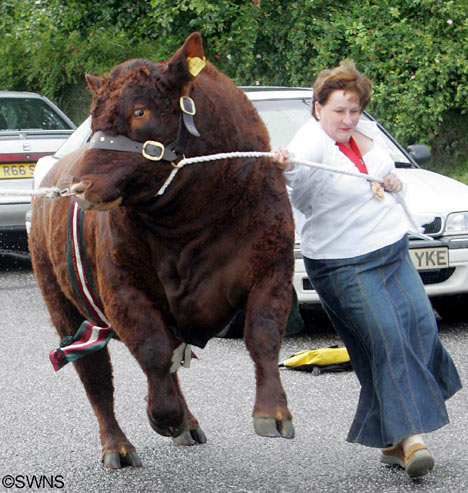
Even if you do need to make a claim, no worries - us tenants have already subsidised your tribunal application. We pay $14 million a year from the interest on our bonds to the Civil and Administrative Tribunal to make sure your costs aren't too high.

In the end, the question you really need to ask yourself is - would you vote against this face?


Thursday, September 29, 2016

Postcard from Victoria - Pets, Repairs and Airbnb

If you've been paying attention to renting news this year you'll have seen a number of court and tribunal decisions about renting in Victoria getting quite a lot of attention. Here's our roundup of the decisions and what they mean for us here in New South Wales.
Okay, not that Victoria.

Pets

In great news for pet lovers, the Victoria Civil and Administrative Tribunal ruled that apartment blocks cannot have a blanket ban against pets. If there is a good reason to disallow a particular pet (keeping an elephant in a studio, for instance) then it is still open for the body corporate to refuse the pet.
As the Tenants' Union of Victoria said: "A blanket ban that says you're not even allowed to own a goldfish is clearly ridiculous."

What it means for us:
Some of the legal working in Victoria's strata legislation and ours is quite similar, so it is possible that similar blanket bans here are not legal. However, we wouldn't recommend running out to bring home a new pet just yet. Even if strata cannot block you, which is still a very big if, your landlord remains the biggest barrier between you and your new best friend. We've written about that side of things quite a lot on here.

Repairs

Victorian tenants now have the ability to force a landlord to carry out repairs, even if they knew they were moving into a property that wasn't in good repair. Often tenants with little choice are forced to accept substandard accommodation - this decision gives them a little more power. As Victorian Legal Aid's Dan Nicholson said, "Ms Shields had little bargaining power in the market and was desperate to put a roof over her head... no one in Victoria should live in the conditions that Vikki Shields did for five years."
Renovator's delight... Full of character!

What it means for us:
NSW landlords already had the obligation that Victorian landlords now do - the obligation to both provide and maintain the premises in a reasonable state of repair and fit for habitation. There is no validity to the claim some landlords make that you take a property as is.
However, many tenants still live with repairs issues, often for the whole of their tenancy, so what gives?
The reason is fairly simple - many tenants know that a landlord holds a trump card over them. In NSW, as well as in Victoria, landlords can force you to leave without a good reason. In fact without any reason at all, which means that if you push too hard for repairs (and sometimes too hard is not very hard at all!) they can avoid the issue by forcing you to leave. Even being in a lease is no protection if its ending anytime soon. In the meantime, they still haven't fixed the leak keeping you up at night.
Ms Shields in Victoria had little bargaining power and many tenants in NSW feel the same way, with good reason.

Airbnb

There is a lot to talk about with Airbnb, and we'll be doing more over the next few months. Right now, we'll just focus on the two cases this year concerning Airbnb in Victoria. The first, ultimately decided that a tenant is subletting (and therefore in breach of the agreement) if they vacate the premises while the short term guest stays, even if its only for a short period.
The second, determined that the owners corporation of an apartment building cannot have a blanket ban on Airbnb style lets.
'Rent Street' Millers Point

What it means for us:
It is not clear yet what the two rulings mean for NSW residents. We agree with our colleagues in Victoria who said "Tenants should have the right to utilise the property as they wish, so long as they are upholding their responsibilities as a tenant.” However, knowing what those responsibilities are can get a little muddy.
A fairly perverse outcome of deciding that a two or three night stay constitutes a lease is that, much to the chagrin of many currently gleeful property owners, Airbnb guests could potentially claim full tenancy rights under the Residential Tenancies Act. Our Act contains an exclusion for holidayers, but not (for instance) for workers on a short trip.
The inability to have a blanket ruling against Airbnb largely affects the building owners more than tenants, and as it rests upon the particular workings of the strata legislation in Victoria, it may not apply here. If it does, tenants will still need to deal with the issue of whether or not they are subletting and need their landlords permission.

Keeping an eye on what happens in other jurisdictions is often very useful for our own state, but when you read articles in the paper remember that not all states in Australia are the same!

Monday, August 22, 2016

New strata rules and you

Starting 30 November 2016, there will be some significant changes to the laws affecting tenants living in strata blocks. That's actually a lot of us - more than half of all people living in strata in NSW are tenants.
You can read more about the changes here, but what are the big changes that will be of particular interest to tenants? As is often the case with legislative reform, it's a mixed bag. Here are the ups and downs of four big changes which will affect tenants.

Pets
Considering the futility of life without strong tenancy rights
The model by laws will now be much more pet friendly. The default position will be that pets are allowed so long as the pet owner is responsible for the animal.
This is only the default for new by-laws. Existing strata schemes will need to vote to adopt the change, and even new strata schemes can choose not to use it - and maintain an anti-pet stance.
Of course no matter what the strata scheme decides, currently your landlord still has the ability to put a no-pets clause in a residential tenancy agreement. There is still a long way to go before tenants might make grown-up decisions about pets for themselves.

Washing
Hang me out to dry, you wrung me out, too too too many times
Good news - hanging your washing up on your balcony will no longer be a breach of the by laws, so long as it's not hanging over the balcony railings. Again, this only applies to strata schemes which adopt the new by laws.

Over occupancy
We won't take up too much room!
One of the interesting changes is the ability for strata schemes to limit the number of people who can live in the premises to no more than two adults per bedroom.
By extension, tenants will have clearer protections against strata schemes arbitrarily deciding to cancel key cards with the introduction of this by law removing one of the dodgy reasons some strata schemes have used to lock tenants out of their homes.
It's important to remember that vulnerable tenants who are being forced into overcrowded accommodation may not actually have much of a choice in these matters. That's not to say strata should allow overcrowding, but it is important that it is the exploitative landlord who is penalised by their breach rather than their vulnerable sub tenants. It is not clear in the new law that this will always be the case.

Tenant representation
Whiskers thought he was fitting in well
at his first strata committee meeting
There are two aspects of the new legislation that let tenants have something of a say in their strata community. Any tenant will be entitled to attend any meeting of the owners corporation (except during discussions of financial matters), though they won't be allowed to speak or vote.
In strata schemes where more than 50% of the lots have tenants, the tenants will be able to elect a tenant to represent who can speak, but not vote, on their behalf. How effective this will be at ensuring the majority of the strata community is heard remains to be seen.


Saturday, July 30, 2016

The Tenants Guide to Renting with Pets (NSW)

Yesterday we wrote about a petition going around highlighting the need for law reform regarding pets and renting. But what about the situation for pets, their families, and potential families now? We've produced this handy guide to renting with pets in NSW.

The guide looks at the legal situation for renters in New South Wales and answers common questions we receive from pet owners, including noise complaints, visitors leaving the gate open, pet bonds and more!

The information in the guide is applicable in the state of New South Wales only. If you would like to discuss a specific tenancy issue, the best people to speak to are the advocates at your local Tenants' Advice and Advocacy Service. Their contact details are on www.tenants.org.au.

Friday, July 29, 2016

Tenants: what will it take for you to adopt a greyhound?

Earlier this month Premier Mike Baird announced the closure of the NSW greyhound racing industry, following a Special Commission report into widespread cruelty. The industry will be wound up in an orderly fashion, with a plan to be implemented over the next 12 months. More information can be found in a published Q&A document from NSW Justice.

The dogs of NSW's racing industry will need new homes
According to the document, there are nearly 7,000 registered greyhounds in NSW. It proposes four ways of transitioning them out of the NSW racing industry: leaving them in their current homes, rehoming them through an adoption program, sending them to other states or countries where the racing industry will treat them better, or euthanise them humanely.

We reckon the first two options look the best. So, it stands to reason that one of the biggest tasks for the industry over the next year will be finding new homes for greyhounds that will no longer be able to race in NSW.

Gemma McKinnon, a long-time friend of the Brown Couch, former Tenants' Advocate and one-time lawyer at the Tenants Union of NSW, would love to adopt one. But she has a problem - her landlord won't allow it. And while renting laws in NSW don't specifically require tenants to get their landlord's permission to keep a pet, most residential tenancy agreements do. She's started a change.org petition to draw attention to this, pointing out that "current tenancy laws in NSW mean that many potential greyhound owners are unable to assist in rehoming greyhounds because landlords can (and often do) refuse tenant requests to have pets in their home".

We've long advocated for a prohibition on "no-pets" clauses in tenancy agreements. We argued for this during the recent review of the Residential Tenancies Act, but unfortunately Fair Trading NSW has made no such recommendation in their report. In fact, they've declined to make any comment on the issue altogether. Given the Government's intention to shut down the greyhound racing industry and create a flood of animals facing euthanasia if they cannot be rehomed, this is a terrible shame.

One in three households in NSW are in a rented home. That's an awful lot of people who might put their hand up to help out, if only they could. Ms McKinnon's petition has attracted more than a thousand signatures since it was launched earlier this week. That's quite an indication of support.

Fair Trading and the NSW Government should reconsider their position on this.


Tuesday, April 19, 2016

Please can we have a cat?

Renting with pets is risky, you've got to be responsible in ways that others do not. Unlike tenants, home owners can't be evicted for failing to train a dog not to bark at passing traffic, and they don't really have to be concerned about the damage their pets might cause - at least, not as far as it might affect other people. But because home owners are considered bona fide grown-ups, we let them decide for themselves whether or not to keep pets. Tenants, on the other hand, are apparently not to be trusted with such decisions without the blessing of a landlord.


To many tenants, it might seem a little outdated to speak in such terms, but we reckon we're on pretty solid ground. Even as recently as November last year, NSW Fair Trading reminded us that "historically, renting has been seen as a short term option - a stepping stone to home ownership", and that the rental market was "previously dominated by young people". This is reflected in our renting laws as much as in conventional expectations of our travels along the housing continuum, which haven't yet caught up with reality. Renting is still thought of as transitional, the domain of young people who haven't yet settled down, or hapless old fools whose very circumstances prove they're not up to the rigours of grown-up decision making. But that's okay because landlords - our "mum and dad investors", no less - are there to make the hard decisions for us.

Home ownership, of course, is the path to unrestricted agency. Evidently some magic happens the day you take on a mortgage and truly come of age, whereupon all your choices become sensible and responsible. Hence, it doesn't matter that a homeowner's dog barks all day and digs holes under the fence - they're entitled to keep one and we trust they'll do the right thing by their neighbours eventually.

No doubt there are landlords who are happy to rent to tenants with pets. After all, animal lovers come in all shapes and sizes. There are those who might not really mind either way, though won't really think about it unless you ask them. But most landlords operate with a blanket policy, insisting upon setting this most basic of house rules for their tenants: no pets allowed.

It may come as a surprise that there's nothing in New South Wales' renting laws that directly supports this. There is no legislated requirement for a tenant to seek their landlord's permission to bring a pet into the household. On the contrary, there are rules about a tenant's right to "peace, comfort and privacy in using the premises" that should extend to the question of keeping a pet. But there are also rules that allow landlords to impose certain terms in a residential tenancy agreement if they "permit the tenant to keep an animal on the premises", which prompts landlords not so much to include terms allowing pets to be kept on the premises but to insist upon the outright exclusion of any prospective tenant who intends to bring a pet to live with them.

There are well-worn arguments circulating around in an effort to explain this. Pets cause damage, pets cause a nuisance, etc etc. But none of these arguments presents a problem that our renting laws aren't already equipped to deal with. Tenants are responsible for their pets, just as they can be responsible for any silly little thing a guest might do having popped around for drinks on a Saturday night. If a tenant's pet causes damage, or a nuisance, then the tenant will be in breach of their residential tenancy agreement and required to make good. A number of remedies will be available to the landlord, including termination of the tenancy and compensation for any loss arising from the breach, unless the tenant is somehow able to resolve the matter by other means - such as removing the pet from the premises. This, it must be said, is a very strong incentive for tenants to take good care of their pets, and their properties, and to adopt a responsible attitude all around.

Faced with such responses, conversations about tenants and pets tend to degenerate fairly quickly. There's always that one person who rented a place out to a pet lover only to find the carpets were no longer brand new at the end of the tenancy, and another who lived downstairs from a guy who kept a rottweiler in a two-bedroom apartment while he went off to work every day... These inevitably lead to more philosophical objections, such as "I'm the one paying off the asset - I'm assuming all the risk. What about the neighbours? The welfare of the animal? Tenants are all care and no responsibility".

Of course, this brings us straight back to the issue at heart - tenants are not-yet grown-ups, and landlords are our mums and dads. Of course we should defer to them on questions of responsibility. Of course we should.

Only, we're not buying it. As more and more people are excluded from home ownership because of the extraordinary costs of entering into a mortgage, we are having to find other measures of becoming a grown-up. Finishing our studies, holding down a job, forming relationships, having families... all things we can do regardless of whether our home is rented or bought on borrowed funds. So, too, should be our choices about living with pets.

A simple change to the law is needed: landlords should be prevented from including "no pets" clauses in residential tenancy agreements. Whether or not to keep a pet should be a matter for the occupants of the home, not the landlord. Tenants should be free to make this choice responsibly.

As it happens, our renting laws are currently under review.  The Hon. Victor Dominello, Minister for Innovation and Better Regulation, who is responsible for NSW Fair Trading, is required to table a report on the Act to Parliament in June this year. In the lead-up to this review, the Tenants' Union produced a report outlining a number of other changes that need to be made to the law. To help us keep focus on this issue, without losing sight of many other things, we've taken the text from this report and turned it into a wordcloud shaped like a cat.

Oh yes, we did...


Monday, June 15, 2015

Pet Friendly Landlords

The Animal Welfare League Australia is running a competition to find Australia's most pet friendly landlord. You can find out more and nominate landlords here: 
We'd like to make our own nomination - the NSW Land and Housing Corporation. 
For many years they have had the practice of allowing pets as standard. Their agreement currently states it as:
KEEPING OF PETS
38. The landlord agrees 
38.1 subject to any by-law applicable under clause 33* prohibiting pets, that the tenant may keep pets in the residential premises if the pets do not interfere with the reasonable peace comfort and/or privacy of neighbours.
38.2 The tenant agrees to remove any pet within 48 hours where in the reasonable opinion of the landlord the pet is not suitable to be kept on the premises and the landlord gives the tenant written notice to that effect
38.3 Clauses 38.1 and 38.2 do not apply to restricted dogs as defined by the Companion Animals Act 1998 or dogs declared as dangerous pursuant to that Act. The tenant must not keep any such dogs on the premises
Essentially, Housing leave the decision of whether to own a pet up to the tenant. This is only reasonable, as tenants are people who can make their own decisions, and be held accountable for that decision later in the event damage is caused or cleaning is required. The middle clause has given some tenants of the Land and Housing Corporation a little problem where the reasonable opinion of the landlord might be called into question- for instance, where neighbours and council have no issue with a dog but particular staff of the landlord do. In general however it is so far above the standard practice of other landlords it can be held up as the most reasonable approach to pets in rental we've seen in NSW.
If you've had a great experience with your landlord supporting your pet ownership, do consider letting the Animal Welfare League know.
Read more about this aspect of our Just Renting platform.

Friday, September 26, 2014

How landlords think, and how it shapes the rental market

'Landlords hit by glut of apartments'! That's a recent headline from the Fin Review; we enjoyed reading it literally.


As Ned said over on our facebook page, the article is an insight into how landlords think – landlords like Hugh Eriksson, marketing executive, North Shore local politician and landlord, who reportedly has 'bent over backwards to keep rents near to stable', such is the glut of apartments from which tenants may pick. Why, this young pup landlord has 'even allowed pets'! Oh, the humanity.

How landlords think affects more than just your ability to choose whether you'll keep a pet, important as that is. How they think affects the shape of the rental market. As we saw in those charts from Judy Yates, if there's a glut of rental housing, it is not at the low-cost end of the market, which is very tight indeed, but further up the scale of rents.


And how landlords think affects not just affordability, but also the security of rental housing.

Eriksson says this about his thinking as a landlord:
“You don’t just buy property for rent – you buy it for the capital growth,” he says.

Rent is money that tenants promise to pay, week after week, under legally enforceable contracts, but when it comes to capital gains, there's no such promise; pursuit of them is really just gambling on someone coming along, at some point in the future, who is willing to pay more. So why is Eriksson – like so many other landlords – so interested in capital growth?

It's because in our tax system, rental income (and income from work, interest, etc) is taxed at the full marginal rate – while capital gains are taxed at only half that rate.

Yes, we tax the proceeds of speculation – gambling, really – at half the rate of the proceeds of work, bank savings and rental income. Go figure.

About 1 266 000 Australian taxpayers have gone and figured, and borrowed to buy properties that rent for less than what it costs to own them (because of interest, more than anything). Two-thirds of landlords are in this situation, which is known as negative gearing. They are gearing, or leveraging, into the prospect of lightly-taxed capital gains – so they hope – while losing income.

In an internationally unique act of generosity, our tax system makes those loses easier to take by allowing the costs of rental property speculation to be deducted against other (non-rental) sources of income. This means landlords can wear bigger costs and push their leveraging harder.

The tax system also gives their hopes of capital gain a boost by not taxing at all any capital gains on housing used for owner-occupation at. This spurs people with money to spare to spend it on their own housing – housing that they may buy from another owner-occupier, or a from landlord looking to realise their capital gains.

So, from the point of view of the speculator landlord, the best prospects for capital gains are with properties that owner-occupiers might buy, particularly owner-occupiers who are trading up and speculating in their own housing. That means relatively high value, 'premium' properties, or as premium as the speculator can get. Think established locations, which tend to have established properties, and properties that are renovated or fit to be renovated.

As Erikkson says:
“You use the rent to cover the ­holding costs while you get the DA approvals for renovations.”
Once the renovations are done, he sells. “You get your capital gain that way,” he says.

You also get expensive and and chronically insecure rental housing that way.

Expensive because speculator landlords are buying relatively high-value, high-rent properties, and passing on the low-value, low-rent stock when it comes up for sale. And they're getting those higher rents too, because they're not really adding to supply in net terms (that is, as they're growing the amount of properties in the rental market, they are also growing the number of renters), and the growth in renters is coming from higher income households who can afford to pay higher rents. These households might actually be getting quite a bit of choice between nice houses in nice parts of town – enough choice, even, to be able to get their landlords to 'bend over backwards' on rent increases and pets. (Mind you, many of them would still probably rather be owners.) But for low-income renters, the low-rent properties they need have become scarcer, and less cheap.

And it's chronically insecure housing because it is is owned to be sold, particularly into the owner-occupier market.

These are the unhappy results of the way landlords think about owning rental properties. To change the rental market for the better, we need to change landlords' thinking, and to do that we need to change the rules that encourage speculation in housing. 
 

Monday, November 4, 2013

Strata reform: early signs

Some early signs of the NSW State Government's new strata laws are reported today in the SMH, including new model by-laws that allow pets, and 'encouragement for tenants' participation in apartment block affairs.'


Without any further detail, it is difficult to say anything definite about these prospective reforms, except that they look to be heading mostly in the right direction.

In particular, a more liberal approach to pets would be welcomed by many people living in strata. We think a model by-law that allows pet-ownership is a good start, but more is needed to really secure people's freedom of choice in the matter. Strata legislation should prohibit and invalidate by-laws that restrict the keeping of pets without regard to the circumstances of each case.

Also, our residential tenancy laws should be reformed too, to prevent landlords from imposing their own unreasonable restrictions on pet-ownership.

As for tenant participation in strata governance, we think this would be done most appropriately by distinguishing by-laws about the conduct of residents from the other affairs of owners corporations, and giving tenants a say – and a vote – on them. 'Conduct by-laws' would include by-laws relating to keeping pets, smoking, playing music and making noise, and the use of common areas and facilities. Giving all strata residents a say in these matters is not only fair; it may also mean more effective governance.
  

Monday, October 21, 2013

Grattan Institute on housing subsidies

We were just saying in Anti-Poverty Week how our housing system, in the absence of a genuine housing policy, enriches some while it impoverishes others – now the Grattan Institute puts some numbers on the problem.

The Institute's report, 'Renovating Housing Policy' looks at the cost and allocation of subsidies provided by Australian governments and delivered through the private housing system.

The winners are home owners, recipients of $36 billion (on average, $6100 per household) in tax expenditures and other benefits each year. These subsidies come from the exemption of owner-occupied housing from capital gains tax, land tax, income tax (on imputed rents), and the assets test for the Age Pension, and the First Home Owners Grants. Take a bow, home owners.

Runners-up are the landlords, recipients of $6.8 billion (on average, $4500 per household) in subsidies per year. These subsidies come from our generous tax treatment of capital gains and negative gearing.

And limping in in third place: private renters, whose Commonwealth Rent Assistance is worth, on average, $2900 per household per year.


All in all, more than 90 per cent of housing subsidies go to property owners. Some further dimensions of the inequity of our housing system are also made clear in the report.

First, rates of home ownership are declining, particularly amongst younger and lower-income households, so access to these subsidies is concentrating amongst older households and higher-income households.


Secondly, amongst owner-occupiers and landlords, the largest subsidies go to the households with the highest incomes.

The report concludes with a call for the renovation of housing policy, including such sensible measures as a broad-based land tax, a reduction in the preferential treatment of negative gearing and capital gains, and tenancy law reform to improve tenants' security and freedom of choice (for example, the choice to keep a pet).

A final thing: you might wonder where social housing fits in housing subsidy league table. The report doesn't say, but according to the most recent data from the Australian Institute of Health and Welfare, of public housing households who receive a rental rebate, the average amount is just under $6300 per year. Which puts their level of housing subsidy just ahead of most home owners, but still behind the level of subsidy that goes to homeowners in the top 20 per cent by incomes.

Tuesday, November 13, 2012

Renting with pets in Sydney: survey

If you're a pet-owner who rents in Sydney (or have done in the past 10 years), researchers at the University of Western Sydney would like to hear from you.

The Renting with Pets in Sydney survey aims to create a greater understanding of how the rental market works – or doesn't work – for pet owners.

Complete the survey online at http://www.uws.edu.au/rentingwithpets.


The researchers will also be conducting interviews with pet-owners who rent. To participate, contact the researchers through the Renting with Pets in Sydney survey page.

We look forward to the reading the researchers' report. The Tenants' Union's recent submission to the Companion Animals Taskforce about pet-owning in rental housing can be found here.

Thursday, May 31, 2012

Pet-friendly rental housing?

The NSW Companion Animals Taskforce was established by the State Government to advise on ways of reducing the appalling numbers of cats and dogs that are surrendered or abandoned by their owners, and subsequently destroyed.

Last year, almost 50 000 cats, and 70 000 dogs, ended up in pounds; over 30 000 cats and 21 000 dogs were destroyed.


The Taskforce has released a discussion paper (at the link above) which includes, amongst many other things, a reference to the particular problem of companion animal ownership in rental housing. Private rental especially is not very friendly to pets, or their owners, because most landlords and agents prohibit tenants from keeping animals as a term of their agreements. The concern is that this results in tenants having to surrender animals when they move house, and in their not being able to adopt animals and save them from death row.

The TU's view is that companion animal ownership is fundamentally a matter of personal responsibility. By that we mean:

(1) that an individual should be free to decide that they will keep a companion animal, subject to the law; and
(2) that the individual owner of a companion animal should be liable for its upkeep and any damage or loss it causes.

As things currently stand, tenants have the liability, but not the freedom to decide.

We reproduce below the section of the discussion paper that relates to rental housing. If you've had any experiences of owning a companion animal while renting, or any suggestions as to how to make rental housing more pet-friendly, that you'd like us to consider as we make our submission to the Taskforce, please let us know in the comments or by email: chris[underscore]martin[at]clc[dot]net[dot]au.

*

Option 18 Review barriers to cat and dog ownership in relation to
residential tenancy laws


Key finding
Pet-unfriendly rental accommodation and strata-titled housing (whether owned or
rented) contribute to the surrender of owned pets, and appear to be a significant
factor inhibiting the adoption of companion animals from pounds and shelters.


The Residential Tenancies Act 2010 and Strata Schemes Management Act 1996
could be reviewed to identify existing barriers to cat and dog ownership in rental and
strata accommodation, including the existence of by-laws which currently allow pet
bans. 

Particular consideration could be given to the introduction of a pet bond system,
similar to that operating in Western Australia, to provide a financial incentive to
counter landlord concerns about pet-owning tenants.

Relevant industry bodies could also be engaged to develop and implement
education, as part of a whole of community socially responsible pet ownership
education campaign (see option 12), which address issues such as: 
  • assisting cat and dog owners living in units and rental accommodation to become better neighbours/tenants by ensuring they provide appropriate environmental enrichment and care for their cats and dogs, 
  • the advantages of preparing a pet resume that shows their cat or dog will be a good tenant, and
  • emphasising to landlords and real estate agents that by excluding cat and dog owners they are limiting the potential pool of good tenants. 

Benefits 
  • Removing cat and dog ownership barriers for renters could increase overall demand for animals and reduce the number of animals surrendered to pounds where they were previously unable to be kept by their owners. 
  • A pet bond scheme may allay some landlord concerns about cat and dog owning tenants.

Potential issues 
  • Ongoing resistance from strata/owner bodies.
  • The cost of pet bonds may be a barrier for some cat and dog owners.
  • The cost and/or administrative burden of pursuing damages from tenants where they are over and above the bond amount may be prohibitive, and thus some landlords may support the continuation of a ‘no pets’ policy.
[Extracted from the Taskforce's discussion paper, for readers' info – the options do not reflect the views of the TU.]

Thursday, October 14, 2010

Light globes, pets and Regulation

As we know, Fair Trading NSW awaits comments on the draft Residential Tenancies Regulation 2010.

One of the things this Regulation will do is provide a standard form of residential tenancy agreement, so that landlords (who are responsible for preparing written agreements) don't fall prey to unscrupulous solicitors, who might charge a fee for their "agreement preparation" services...

They wont have to, because an already prepared agreement will be coming to a website near you (sheer genius!) Or so we hope.

We think this is a good idea, because we'd hate for landlords to find an excuse to put the rent up. But, because we like to be cautious, we've gone over the proposed standard form agreement with a fine tooth comb, to see if it includes anything untoward, or just plain silly.

We haven't been disappointed...


"The tenant agrees, when this agreement ends, to make sure that all the light globes on the premises are working" (cl 17.5). "The landlord agrees that all light globes on the residential premises are working on the commencement of the tenancy" (cl 18.2).

One can only assume that the agreement will come with instructions on how to repair a broken light globe. If not, perhaps the smart thing to do will be to pack up all your light globes and take them with you when you move. Chances are, you'll be needing them.

Aside from that, there's not much to report on the silly side.

... But the proposed standard form agreement could go a little way towards mitigating the damage a tricky provision of the Residential Tenancies Act 2010 might do. Section 19 of the Act prohibits some additional terms from being included in residential tenancy agreements, and it specifically mentions professional carpet cleaning. This puts into legislation a consistently held view that carpets only need to be cleaned if they were clean to start with, but they're not clean at the end of the tenancy...

There was a last minute amendment to section 19, which unfortunately didn't receive any discussion when the Act was debated in Parliament. If your landlord lets you keep an animal, they can insist that you clean the carpets when you leave. This could apply regardless of whether your animal is a goldfish, or a raging bull.


To make matters worse, it also doesn't matter where your animal sleeps, or how dirty the carpets were to begin with. It is a bizarre piece of law, representing the unholy union of two quirks - pandering as it does to the fascination some landlords have with tenants keeping pets, and an obsession many real estate agents have with steam cleaned carpets...

The standard form residential tenancy agreement represents our best opportunity to reign this provision in. To achieve this, the proposed "pets clauses" (cl 42 & 43) in the draft Regulation will need a fair bit of work. If Fair Trading NSW can find a way to limit the use of "carpet cleaning" clauses, by incorporating sensible terms in the standard form residential tenancy agreement, then they should be well and truly congratulated. We shall have to wait and see.

Thursday, August 13, 2009

Furthermore...

Brown Couch reader and legendary tenants advocate, Robert Mowbray, has dropped me a line in response to last week's post about the Landlord and Tenant (Amendment) Act 1948. You'll recall that I mentioned that so-called protected tenants under that Act have great difficulty getting repairs done, and that landlords sometimes let their properties go to ruin in the hope of establishing one of the grounds for termination permitted by the Act (usually referred to as 'ground (m)'). Dr Mowbray and the Older Persons Tenants Service (OPTS) have recently been dealing with such a case. Here's a snap of the view from out of the tenant's ceiling.


(Used with permission of the tenant.)

In this case the tenant, 'Gladys', has occupied the premises for some 60 years, and lived on the same street for all of her 94 years. Because of its restrictions, premises subject to the 1948 Act ('controlled premises') are bought and sold at a significant discount, so Gladys has had a succession of landlords over the years, each, presumably, hoping that one way or another she'd shuffle off and thereby leave the owner with a handsome windfall. And, with the hole in the ceiling opening up and the need for reconstruction growing, 'ground (m)' looms.

I'll let Robert finish the story: he's written it up for the next article of 'Around the House', the newsletter of Shelter NSW. Do join up and get your copy. And if you or someone you know is a very long-standing private tenant (ie in the same place since before 1986), please consider getting in touch with OPTS to see if the 1948 Act might apply.

*

And further to another recent post – our study of Friz Freleng's 1950 Room and Bird and its significance for landlord-tenant-pet relations – readers of the Brown Couch will be pleased to learn that agent-baiter par excellence David Thorne has recently corresponded with his landlord's strata manager about an alleged dog. Not to worry, writes Mr Thorne:

I am currently soundproofing my apartment with egg cartons as I realise my dogs can cause quite a bit of noise. Especially during feeding time when I release live rabbits.

Do follow the link and read the whole correspondence. He should write for the cartoons.